
-
In this video, I want to share with you a few tips on how you can focus yourself and your organization on a few breakthrough priorities that will change the game. I believe it's really important for us to learn from our mistakes. And I can tell you one of the lessons that I had to learn the hard way was the value of setting priorities and not just putting your head down and focusing on doing the best you can on many fronts.
I still cringe when I think about an assignment when we had a crisis that was unfolding in front of us. And I basically put all of our priorities on a sheet of paper. And I remember putting them all in these different bubbles and basically assigning these bubbles to different groups and all of that. So essentially, as a leader, I was not adding value in setting priorities and focusing the organization. All I was doing was just moving things around and saying, okay, now let's organize these tasks this way or that way.
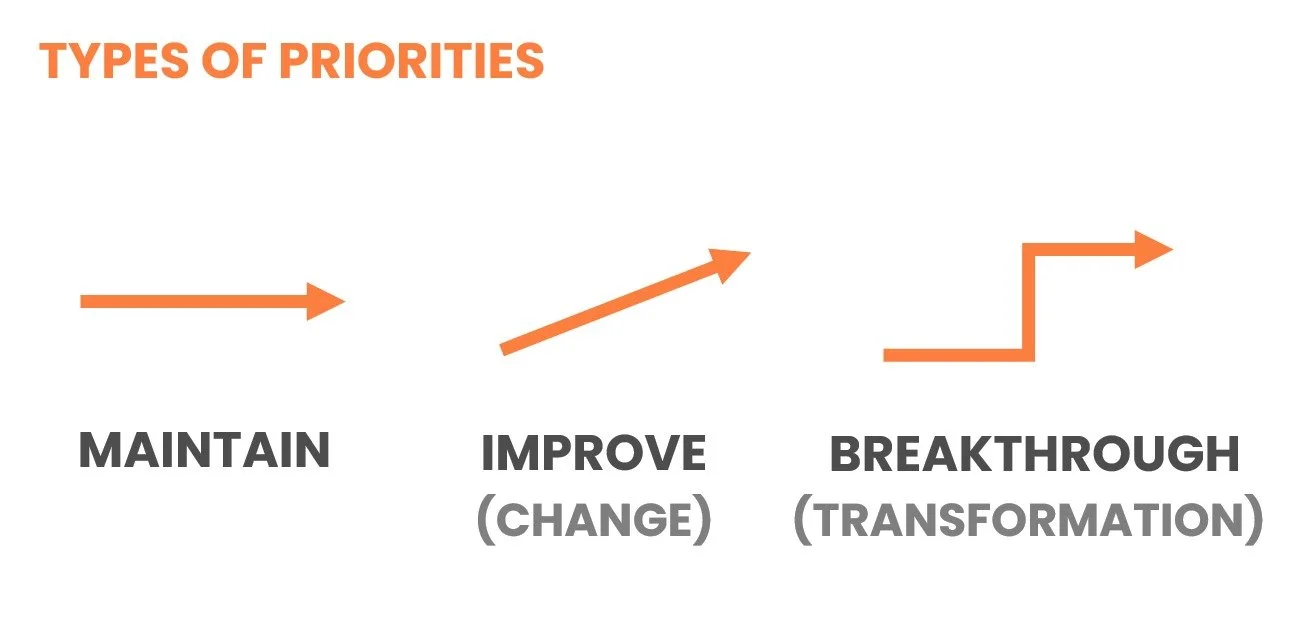
So what I ended up learning in that process was that it is important to make sure that priorities are put in three different categories. There's always a lot of work to be done, right? But these three categories define what type of attention we pay to each of the priorities and how much time and how many resources we put against them. The three types of priorities that I'm referring to are Maintain, Improve, and Breakthrough.
So what does that mean? That means that a lot of work that we do really has to do with basically delivering the day-to-day business results. Those are things that we don't really think about. They just need to be done. We need to put a certain amount of resources against them, make sure that we have our bases covered.
Then there are those priorities that go into the Improve bucket. These are results or systems or behaviors that we aim to improve, steadily improve. So we do need to put some amount of resources against those.
And then there's the breakthrough bucket. And this is usually where we identify one or two priorities where we are expecting to achieve a step change improvement. We don't want to identify too many things in this bucket. And that's where people go wrong sometimes, right?
Now, I've had bosses who would come to me with a number one priority every other week. And I remember distinctly in the midst of that situation where I learned my lesson about setting priorities, I had a boss who just kept dumping number one priorities on me. And at one point, I stopped and asked him, which one of those number one priorities were really number one? And his answer was that they were all number one priorities. Well, it may be that we must deliver all of those, but if you as a leader are just dumping everything on your people and calling everything number one, then they don't really have a good way to think about things and set priorities and make choices around how to allocate resources, and so on.
So what's really important is to make sure that we have our bases covered by ensuring that those maintained priorities are getting done. Then identify one or two breakthrough priorities where we're expecting a step change and make sure that we have those covered and then put the rest of our resources against those priorities where we want to steadily improve the results. This principle is something that is helpful for individuals as a person. But when it comes to organizations, it's even more important because you want everybody to be on the same page. Now, let's talk a little bit about these game changers and these breakthrough priorities, because this is where a lot of leaders get this wrong.
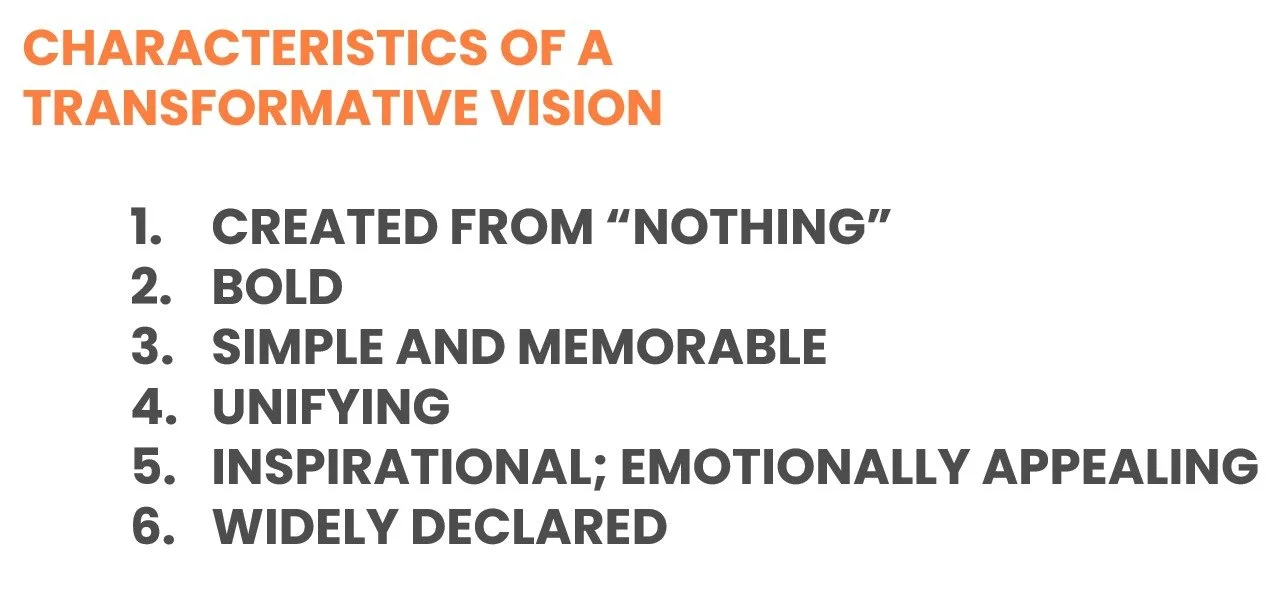
In my mind, there are six characteristics that are really important if you are developing a vision, if you're coming up with those breakthrough priorities. The first one is that you've got to create that vision from nothing. It cannot be a new and improved version of today's reality. Your vision can't be to cut your quality defects by 10%. That's just simply saying we're going to maintain 90% of our quality defects and just reduce it by 10%. Now, you may have milestones. You may have targets that you set. but the vision itself really needs to be created from nothing. If we had nothing, what would we create?
Number two, the vision has to be bold. It has to be something that when people look at it, they're not gonna go like, oh yeah, sure, we can do that, no problem. No, it's gotta be a bold future that is being declared.
Number three, it has to be simple and memorable. I cannot tell you how many organizations I go to where they say, oh yeah, we have a vision statement. Well, what is it? Well, I don't know. Let me look it up and all of that. And it might just even also be on the wall, but nobody knows what it is. They haven't been able to internalize it. So it's gotta be simple and memorable.
Number four, the vision has to be unifying. Now you can accomplish this in a variety of ways. in how do you develop that vision, how you identify those breakthrough priorities. Do you get people involved or you just go into a room and come back and say, okay, this is our vision, these are our priorities? No, you can actually start unifying people by getting them involved. Number two, in how you are writing it and how you're expressing that vision or how you're defining those priorities. Do those words represent ideas that people can relate to? And number three, in how you roll it out to make sure that different people in the organization can relate to it and see themselves in it. They can see something in it for themselves and they can see something in it for the organization. So these are ways that you can make sure that your vision or your breakthrough priorities are unifying.
Number five, your vision or your priorities have to be inspiring. They have to be emotionally appealing to people. It can't just be about some numbers that don't really mean anything to people. We're going to increase our sales by 20%. We're going to deliver this type of result. Well, what does that really mean for me? Do I see myself in that future and what does it mean in terms of my experience and how does it impact me? So people need to be able to emotionally relate to that vision or the results that will be delivered as a result of focusing on those few priorities.
And lastly, the vision and the priorities need to be widely declared and shared with everybody. This is something that has to go beyond just having a town hall meeting or putting something on the company website or looking at it from time to time. It has to be shared widely.
Now, these ideas are nothing new. This is not rocket science. We all know these, but there are some nuances to creating a vision, to identifying breakthrough priorities, and actually going through the process of communicating and implementing the work. And these nuances make all the difference in the world. In fact, there are a number of reasons why visioning efforts fail. So let me go over a few of those with you here.
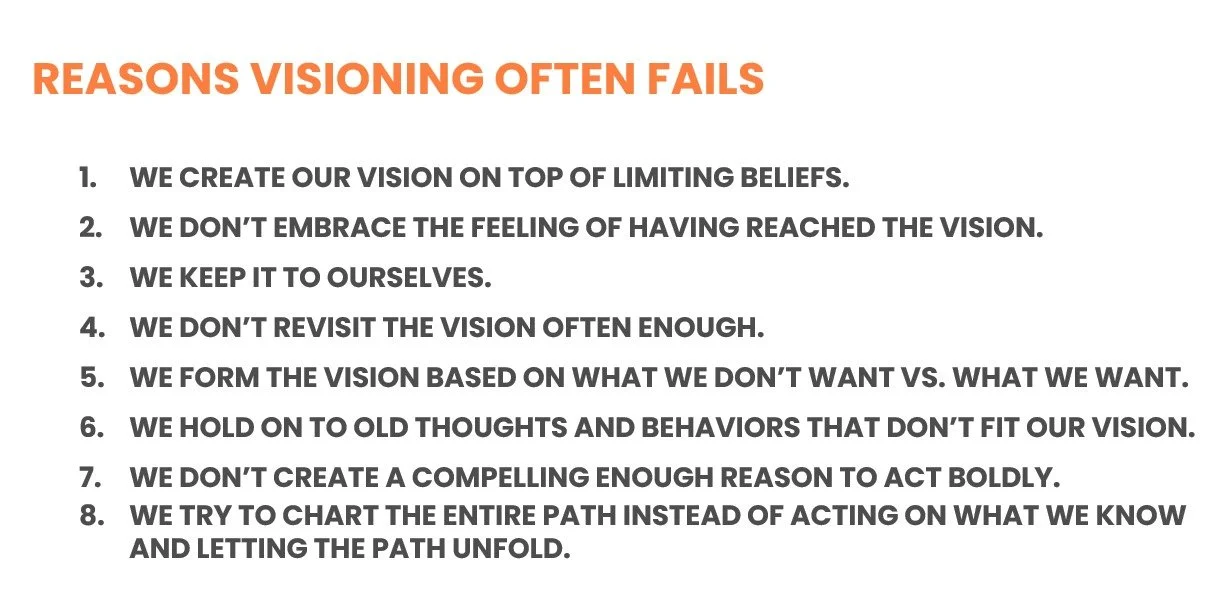
Number one, we create a vision on top of limiting beliefs. The vision has to be discontinuous. It cannot be just a better version of today. By definition, what that means is that it's going to be bold and it's going to challenge us to really think about ourselves as someone who can actually deliver that. And this is where you run into your deep-rooted beliefs. If you have really believed about yourself that you're not good at this or you're not good at that, and you don't deal with that limiting belief, then that's gonna slow you down. Likewise, if an organization has a low self-image, a negative self-image that says, oh, you know, we've never been able to do this and that, once you set that vision in place, you've gotta make sure that it is developed based on what's possible, not what's holding us back based on our past, and that we actually talk about it and we work through it so that those limiting beliefs are challenged and dealt with.
Number two, we don't embrace the feeling of having achieved the vision. So what does that mean? That means that we are not only going to elaborate on what that It means that we're not only going to talk about what it means for the business to deliver those results, but we're going to talk about what it really means for the people who are delivering those results. What sort of benefits will we get from delivering those kinds of results? Something that people can sink their teeth into and emotionally connect with.
Number three, we keep it to ourselves. As I said, a vision or concept, the priorities need to be shared widely. But oftentimes we don't do a good job of sharing openly with everyone what this vision is going to do or what these priorities are going to make available to us. Sometimes that's because we feel like, oh, well, these people are not really affected by it, or those people just need to do X, Y, and Z. And whether we're going for this vision or that vision, it doesn't matter. But you never know. If you widely share it and you don't keep it a secret and you let everybody know where we're going, people can find all kinds of ways to contribute to the journey and accelerate progress.
Number four, we don't revisit the vision often enough. In other words, we develop the vision, we share it, we put it on the walls, and then we go on about our business. It's important to revisit that vision. It's important to bring it up in different meetings to say, okay, how are we doing against these particular priorities? How are we doing in moving toward our vision? So that people can relate their day-to-day activities with the priorities, with the vision.
Number five, we form the vision based on what we don't want versus what we want. I remember distinctly coming up with a vision in an organization where we weren't doing very well. But instead of saying, well, we just want to not be the worst, we said we're going to be the best because that is what inspires people. Not that we don't want this or we don't want so many quality defects or we don't want so many injuries. No, we have targets for those results, but the vision itself doesn't need to be based on what we don't want. It needs to be articulated based on what it is that we do want.
Number six, we hold on to old thought patterns and behaviors that no longer fit our vision. And this is why it's important to revisit the vision on a going basis so we can check ourselves. Is this system, is this process a fit for where we're going? Are these behaviors a good fit for what we want to achieve? Is our mindset the right fit or not? So these are all the minor changes that will make a huge difference if we continue to make those adjustments along the way.
Number seven, we don't create a compelling enough reason for us to act boldly. In some organizations where they have a burning platform and basically they have a situation where they either have to get better or they're gonna shut down or fail, that reason is there. It's like, look, we don't wanna lose our jobs or whatever it is. But in cases where we are not great, but we're not bad enough to actually act, it is a leader's job to create a compelling reason to act and make things happen.
And finally, one of the things that we do that holds us back is that we try to chart the entire path of how we're going to get from point A to point Z, when in fact, we can only see a small part of that path. Now, it's important to step out into that future when we declare that bold future and look back from there and identify the key milestones. But when it comes to executing and achieving that vision, it's important to make sure that we have a plan that covers the short term without being bogged down with what's gonna come next and without being overwhelmed by the size of the challenge, because we're only going to make so much progress in the next few steps that we can see. It's important to recognize that the path will unfold in front of you. So yes, get a broad view of the overall journey, but focus in on what's in front of you and don't get overwhelmed by what it takes to make it happen.
So again, these are just a few tips for you to, number one, set priorities and don't put everything in the same bucket because all the work is not equal. There are some things you're doing to maintain your results. There are some things that you're doing to steadily improve things. And then there are those one or two things that everybody needs to be on the same page on that you're trying to achieve a breakthrough in and create a step change improvement. And then make sure that when it comes to those breakthrough improvements, that you have those characteristics that I talked about in place. And then stay away from the pitfalls that I mentioned to make sure that your visioning effort does not fail. I'd love to hear your suggestions on what you have seen work or not work when it comes to creating a vision or identifying breakthrough priorities.
I’ve learned the hard way that going all out on every front isn’t the way to lead an organization to breakthrough results. When leaders call everything a number-one priority, they leave people without a meaningful way to make choices about where to focus their time and resources.
Early in my career, during a crisis, I essentially took all our priorities and just moved them around on a piece of paper, think that would be enough to solve our issues. I was organizing work, but I wasn’t really leading. That experience, and many others, taught me that categorizing and assigning varying levels of focus to different priorities is a fundamental part of leadership.
When it comes to setting priorities, I suggest three main categories: Maintain, Improve, and Breakthrough. Maintain priorities cover the day-to-day business that simply has to get done. Improve priorities are areas where we want steady progress. Breakthrough priorities are the one or two things where we are looking for a genuine step-change.
When I think about breakthrough priorities and visioning, I look for six characteristics. The vision must be created from nothing, bold, simple and memorable, unifying, inspiring, and widely declared. It should represent what we genuinely want to create rather than simply a slightly better version of today's reality. And people need to see themselves in that future and understand why achieving it matters to them.
I’ve seen plenty of visioning efforts fail because leaders build the vision on limiting beliefs, keep it to themselves, fail to revisit it, focus on what they don't want, hold on to behaviors and systems that no longer fit, fail to create a compelling reason to act, or try to map every step from today all the way to the destination. People need a broad view of the journey, but it is the leader’s role to help them focus on the next few steps they can actually see and influence.
Key Points
Not all priorities deserve equal attention.
Calling everything a "number one priority" defeats the purpose of prioritization.
A breakthrough vision must be created from nothing, rather than simply a better version of today's reality.
A compelling vision must be bold, simple, memorable, unifying, inspiring, and widely shared.
People need to emotionally connect with what achieving the vision will make possible for them.
A vision should be revisited regularly so people can connect their day-to-day work to the larger purpose.
Leaders should articulate what they want to create, rather than simply what they want to avoid.
Leaders sometimes need to create a compelling reason to act boldly, particularly when there is no obvious crisis forcing action.
Don't try to map the entire journey from point A to point Z. Focus on the next steps while keeping the broader destination in view.
Quotes
“All the work is not equal.”
“Doing the best you can on many fronts is not the same as setting priorities.”
“If you as a leader are just dumping everything on your people and calling everything number one, then they don't really have a good way to think about things.”
“Your vision can't be a new and improved version of today's reality.”
“If you widely share [the vision] and you don't keep it a secret, people can find all kinds of ways to contribute to the journey.”
Explore more Posts






Follow Amir on Social Media