Vlog #10 - The 4C Framework for Achieving Any Goal
Download the Transformation Blueprint mentioned in the video
I recently found myself confronting a transformation that I had been putting off, and I realized that, as often happens with transformation, I was the main barrier to making it happen. That experience led me to reflect on what has helped me overcome hesitation and make extraordinary things happen in the past. I reverse-engineered those lessons into what I call the Four Cs of Transformation: Commitment, Clarity, Cadence, and Community. I have discovered that while discipline has a role, it is often only a temporary solution. Without the Four Cs, discipline rarely produces sustainable results.
The first C is Commitment. We need to be honest about whether we are truly committed to the outcome we say we want. We can strengthen that commitment by magnifying the benefits of achieving our vision while separating real, actionable barriers from stories and fears that may be holding us back. I have also learned that commitment must be about more than just ourselves. When we focus on the difference we can make for others, we have a much more powerful reason to persevere.
The second and third Cs are Clarity and Cadence. Once we know what we’re committed to, we need Clarity about what must happen to make it a reality. I find it particularly useful to start from the desired future and work backward, rather than allowing today's problems to define my entire plan. Then we need Cadence, a structure that turns intentions into action. My Always, Never, and Sometimes framework is useful for helping decide which behaviors are non-negotiable and where we want to leave room for judgment and spontaneity.
Finally, we need Community. Transformation becomes much more achievable when we have people who encourage us, hold us accountable, benefit from the outcome, and celebrate the milestones with us. Whether we’re pursuing a personal goal or leading an organizational transformation, I have learned that nothing great happens by default. We must always be intentional about creating the conditions that make transformation possible.
Key Points
The Four Cs of Transformation are Commitment, Clarity, Cadence, and Community.
Discipline can help, but discipline alone is often a temporary solution.
Transformation begins with determining whether one is truly committed to the outcome they say they want.
We can strengthen commitment by clearly identifying the benefits of achieving our vision, for ourselves and others.
We must distinguish between real, actionable barriers and fear-based stories that may be holding us back.
A powerful commitment must be about more than personal benefit.
Clarity means identifying the actions and milestones required to turn a vision into reality.
Looking backward from the desired future can help us avoid becoming consumed by today's problems and immediate priorities.
Cadence turns intention into action by creating schedules, routines, and structures that make progress more likely.
The Always, Never, and Sometimes framework helps establish clear behavioral commitments while preserving room for judgment and spontaneity.
When we miss a commitment, we should regroup rather than use the setback as an excuse to quit.
Community creates encouragement, accountability, motivation, and celebration, all of which make transformation more sustainable.
The people who benefit from our transformation can become part of the community that helps us achieve it.
Nothing great happens by default. Transformation requires intentionality.
Quotes
"Discipline is a temporary solution to overcoming your desire to give in to temptation and get off track."
"If what you're committed to only benefits you, you’re often not a big enough reason for you to hang in there and to make it happen."
“The vision and the dream is kind of a faded picture. But all these other concerns and the potential barriers are very crisp and clear right in front of you.”
“You have to realize that these pleasures and the pains involved are not always equally represented in our thoughts.”
"Amplify the whisper and tone down the noise."
“Staying on track with meeting your commitments is so much more effective when you have a community who cheers you on and is willing to call you out when you're getting off track.”
"Nothing great happens by default. You've got to be intentional."
-
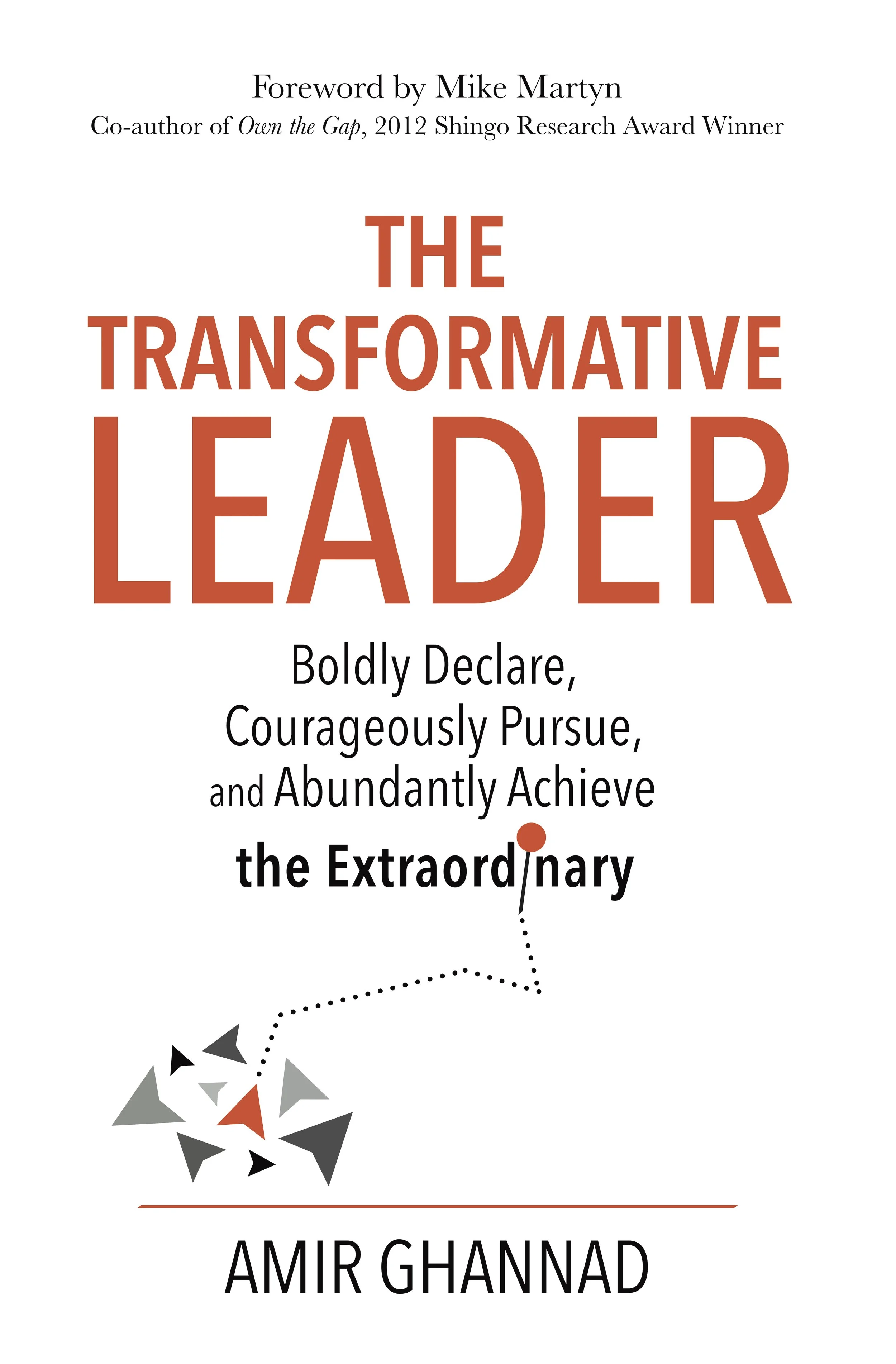
In this video, I'm going to share with you the four key factors, what I call the four C's, of bridging the gap between where you are and where you want to be. I'm also going to give you a free gift from my book, The Transformative Leader. It's called The Transformation Blueprint, which will help you get a head start on planning and implementing your transformation. What has prompted me to make this video is that we, as The Ghannad Group, have been planning a fabulous transformation that we believe is going to make a huge difference for the community of leaders that we serve. And it's been kind of on again, off again. And the main barrier has been yours truly.
I've been dragging my feet and my state has kind of ranged anywhere from hesitation to full on sabotage to make sure that we're not making as much progress. So I've been doing a lot of soul searching and I've been thinking through what is going on? What is at play here? And what I've discovered in the process is that there are key elements that in the past have helped me overcome this kind of issue and continue to push through to make things happen. And I managed to reverse engineer, if you would, the key factors that helped me get past this type of hesitation in the past. So I'm really excited about that. And I wanted to make a video and share this in case somebody else is in that same position.
So if you have a dream, if you have a vision, if there's something you always wanted to do, and it seems exciting, and there's no real good reason why you shouldn't pursue it, but you just haven't done it, this video is for you. To be completely transparent, I'm not sitting here trying to pretend that I'm perfect at this and I never get off track. In fact, I've had more failures than I've had successes in pursuing extraordinary goals. But what I can tell you is whenever I made sure that these four key elements are in place, things have turned out to be absolutely amazing. Now, before I tell you what these four C's are, I want to just own up to the fact that discipline did not make the cut when it came to listing what it takes. So let me tell you why, because
I really believe that discipline is a temporary solution to overcoming your desire to give in to temptation and get off track. Yes, discipline plays a role, but without these four Cs, discipline is just a short-term measure that does not produce long-term results and is not sustainable. So now let me tell you what the four Cs are. The four Cs are Commitment, Clarity, Cadence, and Community.
Let's talk about commitment. The question here is, are you truly committed to that outcome that you say you're committed to? We all say we want this and we want that, but not all of us are truly committed to that outcome. You know, everybody wants to be healthy. Everybody wants to be wealthy or whatever, but they don't want to become that, right? Because the process of becoming does require you to make certain sacrifices and do certain things and all of that. Now, one thing to examine is the pain and pleasure balance. What is the pleasure in achieving that outcome that you say you're committed to? And what is the perceived pain of making it happen? The problem is that it's not an easy exercise to go through to identify the pain and pleasure. Something you have to realize is that these pleasures and the pains involved are not always equally represented in our thoughts.
If you think about it, that vision that you have, dream that you have, that thing that you want at some point is whispering to you. While all the concerns and all the sacrifices you have to make and all the potential risks that you have to take, those things are screaming in your ear. They are loud. The vision and the dream is kind of a faded picture out there. But all these other concerns that you have and the potential barriers and perceived issues are very crisp and clear right in front of you. To sort through whether you are truly committed to something or not, what I suggest is that you find a way to magnify the benefits that you will get by making that thing happen, by bringing that vision to life. And at the same time, sort through the concerns and barriers. For instance, you could sit down and write down all the benefits to you and to others and to your community and to the world of making this vision a reality. Just make a list, a very specific list of what's in it for you, what's in it for them, what's in it for all of us, if that happens. And that way you're taking it out of your head and writing it on a piece of paper. You're amplifying in a way the benefits that you would get.
At the same time, the concerns that are swirling around in your head, what you could do, you could also write those down and you could sort through what's a fact and what's a story that you've made up. What's something that is actionable and what is something that is just a fear from the past that has kind of resurfaced. You can engage somebody else and reading that list out loud to them And that always helps because when you read something out loud, it has a lot more clarity than when it's going through in your head. And actually, if you read it out loud to somebody else, they can help you sort through fact and fiction. And that way you can identify those actionable barriers and then set aside some of the stories that are coming out of your fears.
So as you go through this process, what you're doing, in fact, is you're amplifying that whisper and you're toning down the noise so you will be more likely to get action on those things that you can do something about to overcome the barriers while you're being fueled by this energy that you get from your excitement about that future that you are about to create. One other thing I will mention about your commitment is that it cannot only be about you. If what you're committed to only benefits you, you are often not a big enough reason for you to hang in there and to make it happen. It has to be about somebody else. When I was writing my book, initially, it started as an idea to make a difference for others. And I was truly passionate about it. And I was writing every single day. Then at some point, it occurred to me that I was going to be an author. I may be famous. I might even be rich. And so at that point, it became about me. Oh, I need to finish this book because this is going to be good for me. And I have to tell you, that slowed me down a lot because every time I sat down to write, I would write something, but they would not be as meaningful. It was not until a few weeks later when I discovered that it had become about me And I rededicated myself and I committed myself to the people who were going to read this book that it started flowing again. I have many of these examples where I have not been a big enough reason for me to hang in there and make something happen. But when it's about somebody else and the benefit they get, then that's a big enough reason.
So the question I have for you is, what is it that you are committed to? And I think it's important for you to be honest with yourself. That if you truly are not committed to something, then let it go and honor your choice. And it's totally fine. But find something that you are truly committed to making happen. Assuming you are committed to a cause or an outcome that passes the commitment test.
The next thing you want to do is have a certain amount of clarity around what it takes to make that outcome happen. Now, you may change this list of things that need to happen as you learn more things, as the circumstances change. But based on your current knowledge and everything that you know, write down everything that needs to be done to make it happen.
Now, this doesn't necessarily have to be in any particular order. Just brainstorm a list and then organize it later. But identify what are some of the key actions that need to be taken. What are some of the key milestones that you need to reach in order to achieve your vision? A word of caution for you is not to just be focused on the immediate challenges that you have. You see, a lot of times when I take leadership teams through an exercise to come up with a strategic plan for the next three years, what happens invariably is that they want to put everything in the next six months and then they don't know what they're going to do in the next two and a half years. So I have a way to facilitate the process so that we're not only focusing on the immediate priorities that are in front of us and lose sight of what needs to happen in the long term. So we do that with a simple and very powerful exercise.
In fact, one of the ways that you can do that on your own is take an approach that doesn't start with the present moment looking into some distant future. Assume that it is a year from now, two years from now, whatever the timeline is for that transformation that you want to make happen, And then look back from there, independent of today's reality, independent of today's challenges, and just plot out what are some things that need to happen over the course of this timeline to make that outcome happen. And then fill in the blanks with some of the things that need to be done in order to overcome the barriers that you're dealing with in the short term. That way you have a better picture of what it takes to go from point A to point B and not just a view of what it takes to deal with today's problems. Going through this exercise will give you a great deal of clarity on not just what you're committed to, but what you believe, at least at this point, it will take to make it happen. Now, if you're going through this process with your team, of course, you would get them involved in generating ideas. And in fact, it is extremely helpful for everyone to contribute to this process and give their input and ultimately have a certain level of clarity around what it takes to make the vision a reality. Once you know what you're committed to and you have a certain amount of clarity around what it takes to make it happen, you've got to then move to the next C, which is cadence.
You've got to put a structure in place to make sure that those things that need to happen actually happen. You see, without cadence, we end up with things like these New Year's resolutions that vaporize within 14 days, right? So yeah, my New Year's resolution is I'm going to lose 20 pounds. And I tell you what I need to do is eat less dessert and exercise a little bit more. But then it fizzles out because we have no schedule. We have nothing that we have really committed to in the way of making it happen. So creating a structure is really important. Again, even more so if several people are involved in this, if this is a team effort, but most certainly also for you, if this is an individual goal for you. A practical exercise that I recommend to you is to take all the behaviors and the actions that you've already identified and put them in three buckets. Those three buckets are Always, Never, and Sometimes. So let me explain.
Always, that bucket includes all the things that you know that you must do without questioning. These are things like okay, I get up in the morning and I brush my teeth. This is not like, okay, do I have time or not and all of this. So those kinds of things in our lives that we do without thinking, without questioning, the always bucket contains those. So for instance, if you've decided that you're going to lose some weight and you've decided that you're going to exercise, you say, okay, you know what? I will always exercise three times a week. You might put in the Never bucket, some things that are the opposite of what needs to be done. So if what needs to be done is we stay away from too many calories and so on and so forth in that particular example, you might decide that at least for a short period of time, you will never have a piece of cake, right? Whatever that is for you, but you get real clear that there are things that you will always do and there are things that you will never do and you don't question them. Now, you can come back and revisit that list and you can change it as often as you want. However, you want to stick to those lists and you want to do what you said you were going to do. Now, why do we have a Sometimes bucket? Because we want to also allow for some spontaneity. We want to allow for some creativity. We don't want to dictate on the front end that I will never do this and I will always do that and there's only two buckets. No, we want to leave some room for judgment.
Now, going back to this discipline piece, you may decide that you just don't have the discipline to overcome the temptation to have that piece of cake if you go to a cafe that serves all those delicious cakes. And so you might say, I will never go to a cafe. However, somebody else might say, you know what, I trust myself to be able to handle that, so I will sometimes go to the cafe. So it's important to put those actions and behaviors in those three buckets, Always, Never, and Sometimes. Now, once you do this, what you wanna do is create a schedule. If you said you're going to exercise three times a week for 20 minutes on what days, at what time, do the best that you can on the front end, to set it up in a way that has a good chance of getting done. And by the way, if you don't do it, then don't just kind of use that as an excuse to get off track, but reschedule it. Okay, something came up and you messed up or something happened. All right, so you didn't do it today. What are you gonna do now? When are you gonna reschedule that for? Now, I know this is a very simple process and it may not seem like it is all that powerful, But this cadence, this schedule makes all the difference in making sure that those things that need to get done will get done. Once you have a commitment and you're clear and you've got the right cadence in place, the last C is community.
Staying on track with meeting your commitments is so much more effective when you have a community who cheers you on and is willing to call you out when you're getting off track. When you have accountability partners who are willing to be there for you to make sure that you are continuing to meet your commitment, it makes all the difference. A community is also essential in keeping us motivated to keep going because they will benefit from the outcomes that we achieve. If you are committed to improving your health, your family and your friends could be your community because they will enjoy your longevity. They will enjoy your vitality. If you're working on a project at work, your coworkers, your colleagues, the other stakeholders at work would benefit from the outcomes of that initiative. Finally, there's nothing like having a community that you celebrate with. It is important to celebrate the milestones, no matter how small they are. So I would encourage you to identify your community. Declare your intentions. Let them know that you want them to hold you accountable if you get off track. Remember, nothing great happens by default. You've gotta be intentional.
And my hope is that these four Cs, Commitment, Clarity, Cadence, and Community will help you get going with that commitment that you have been putting on the back burner for some time. Now, I also promised to give you a tool and a process from my book. The tool is called the Transformation Blueprint, and the guide that I'm getting ready to share with you that you can download for free asks you 10 questions, and it gives you explanations on how to answer these questions so you can prepare to implement your transformation successfully. Please click the link in the description or comments and download this tool, and I would love to hear how it's working out for you. I wish you the very best. May you boldly declare, courageously pursue, and abundantly achieve the extraordinary.
Explore more Posts





Follow Amir on Social Media