Vlog #12 - Don’t Sweat the Big Stuff: Culture Lives and Dies in the Details
-
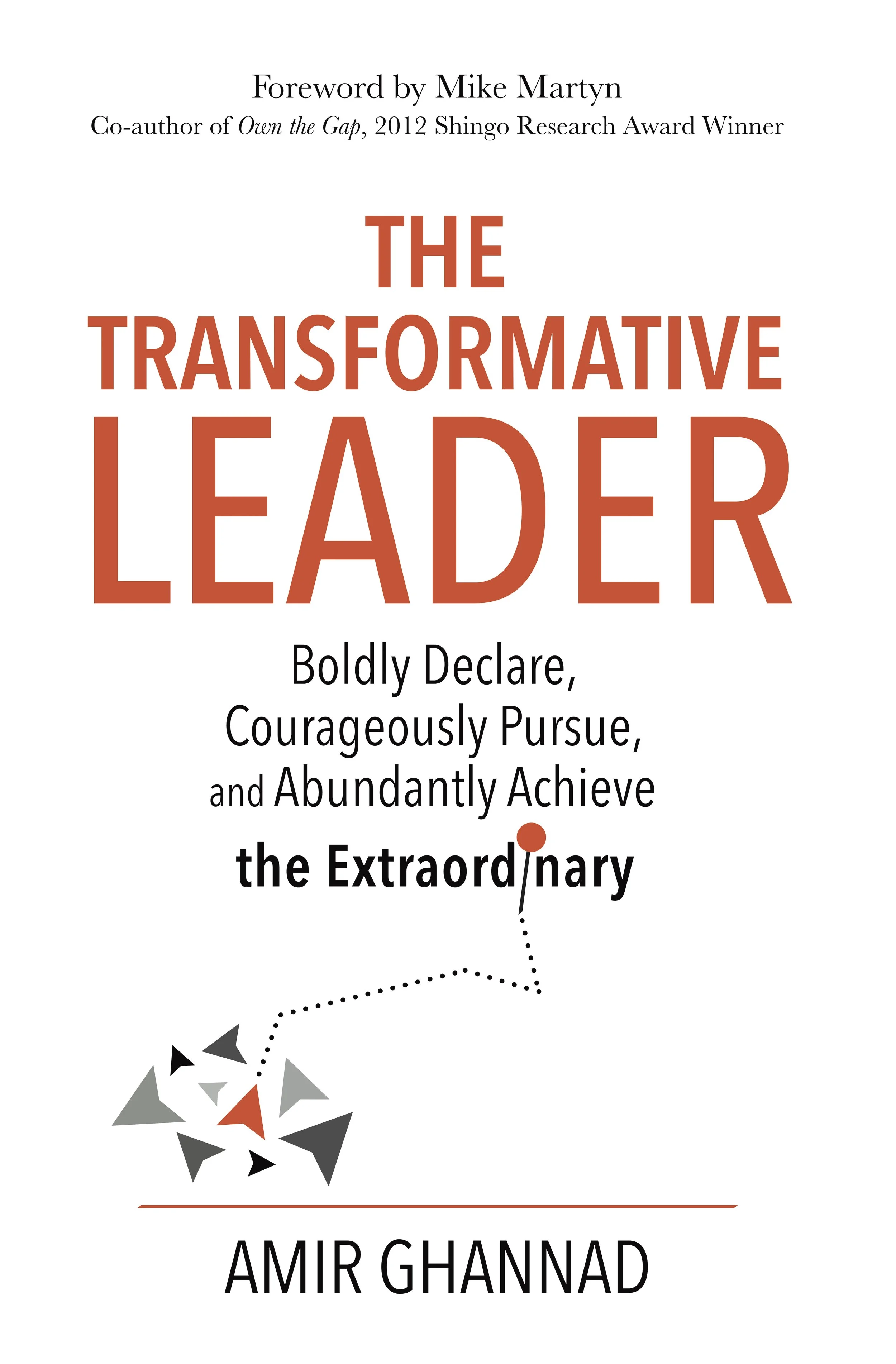
I'm sure you've heard the phrase, don't sweat the small stuff. You may have even read the book by the same title. In this video, I want to turn that idea upside down and suggest that when it comes to leadership and organizational culture, you should sweat the small stuff, not the big stuff. Not necessarily because the big stuff is not important, but because most people, most organizations get the big stuff right, but they miss the mark on the small stuff. Leaders lose credibility because they make the big announcements, they take the big steps, but then they fall short on following through on the small things. As a leader, when you make a declaration, you're letting people know what you claim to believe. But when they see the behaviors, when they see those ideas in action, then they know what you really believe and who you really are. And that is where we fall short. We may make a vision statement. We may put it on the walls. We may make a company announcement. We may even have a town hall and a Q&A afterwards. But then we don't live those ideas. We don't have the conversations. We don't make sure that those ideas that are embedded in the vision are coming to life for people. and that they can make the connection to their everyday routines. I want to share with you a few examples of how I have seen this play out as I've worked with organizations and leaders where leaders have lost credibility and have come across as hypocrites because they've said one thing, and in effect, they've done something completely different. A word of warning here for you is that it is probably easy to spot how you've been on the receiving end of some of these behaviors. You've probably seen these in your bosses. But as I go through these examples, I'd like you to also examine whether you have been guilty of doing any of these and identify some of the changes that you can make in your behavior so that you can be a lot more effective and align your big, announcements and big steps with the small things that you can do to back them up. One example that comes to mind is building trust in organizations. Everybody says they are trustworthy, that they are gonna trust people and all that. Even the least trustworthy person is not gonna get up in front of people and say, you know what guys, I cannot be trusted. When I was a leader at a plant where trust was destroyed by the previous leaders, I never asked people to trust me. I only asked them to give me the opportunity prove myself trustworthy or not. I ask them to bring their problems to me and then watch how I handle it and give me an opportunity to prove to them that I'm going to follow through and that I'm going to honor my word. And so the problem is that we tell people that we are going to trust them, but then when it comes to our day-to-day behaviors, we micromanage, we second guess, we constantly try to give people the answers that we think they need to go and explore as opposed to giving them some room and some trust to come up with solutions and implement them. Trust is not built in the course of a workshop or as a result of an announcement. People watch us every day to see how we behave. So the missed opportunity shows up in the form of those short conversations where the person is looking to see if you are willing to trust them or you're going to jump in and tell them what to do or second guess whatever they're telling you. Another thing all leaders tell people is we want you to speak up. Psychological safety is important. We want you to challenge us. Everybody says that. But the real test is when somebody says something that the leader does not agree with, how do they behave? All eyes are on the leader at that moment to see how they behave. Do they actually accept the feedback? Do they engage in a productive way to understand the other point of view? Or do they get upset and defensive? Those are the tiny little moments where people find out what you really stand for. So don't sweat the big stuff. You're gonna say the right things. Sweat the small stuff. In that moment when you are feeling defensive, make sure that your behavior reflects this notion of creating psychological safety. I worked in an organization where there was a story that was going around from years past where this leader, had actually gotten up in the middle of a meeting and had thrown his chair at a person who disagreed with him. This was a true story. There were many witnesses, and I heard about this story many times. It took us a while to reverse that trauma and to make sure that people understood that a person in my role is never going to do that, as long as I'm in that role. So beware of those small actions that would destroy trust and destroy psychological safety and will require weeks and months of recovery to get back to where you were. Another thing we say is we want a culture of accountability and we may have certain systems in place. Again, the big stuff is going to be in place. Yes, we have a process by which we communicate where people stand and spell out what the consequences are and so on and so forth. But the small stuff is in the nuances of how we handle things. First of all, accountability is not something that is only created when something goes wrong. As I've explained in a previous video, is something that is built into how we treat people. Accountability is not created when you hold someone accountable when things go wrong. Accountability is created when you create a space and give people an opportunity to behave in an accountable fashion. And so the worst thing that we can do is make all these announcements and yet not hold ourselves accountable and let people off the hook when things go wrong. So we might set an expectation or have a standard, for instance, that everybody is going to be on time for this particular meeting. But then next thing you know, somebody is late. They offer no explanation. expect no explanation. And somebody else is like, well, you know, everybody's going to be late a few minutes anyway, so I might as well just show up 10 minutes late. And therefore, when accountability is not present with one person, it eventually erodes accountability. And we find ourselves in a place where we have a slogan that says we want accountability in our culture, but yet our behavior is completely different. Another common thing that leaders say is, we want people to collaborate. We don't want them to work in their silos. Well, that's great, but how are goals determined and assigned? How is the follow-up done? When something goes wrong, do we actually hold just one person or one team accountable, or do we expect a multifunction solution? Again, I've been in organizations where everybody felt like They just need to be accountable to the boss as opposed to their peers in the other functions. So everything just bubbled up to the top and then possibly got tossed over to the other silo and then went down to the front lines and followed the same sort of routine again. And therefore a lot of time is lost, a lot of efficiency is lost because while we are saying we want people to work collaboratively, our systems and processes and behavior is not necessarily creating that kind of collaboration. Another opportunity that I've seen in organizations to close the gap between what we say and what we do is that we say we want leaders to coach their people. When in fact, many of these leaders have never really been coached on how to coach. They have certain expertise and know how to give the answers, but they don't know how to bring out the best in people. They don't know how to coach. They don't know how to ask the right questions. So if they haven't been coached on how to coach, then how are we going to create a coaching culture within the organization? Now, it is not that difficult to close this gap. All it takes is coaching for people leaders to make sure that they understand that their role is not just to deliver the results, but to create other leaders so that they can think for themselves and come up with ideas and solutions. So the idea that I'd like you to take away from this video is sweat the small stuff, not the big stuff, not because the big stuff is not important, but because most likely you have those covered anyway. In fact, I believe that many times the reason we are so fascinated with the big stuff and we want to get those right is because we'd rather deal with the big stuff than the small stuff. I'll give you a personal example from my life. There was a time here a couple of years ago where my wife and I were looking for a gym. So we wanted to get in shape. We were looking for the perfect gym. And we had our criteria defined and we were asking friends and neighbors and all of this. And this process took a couple of months. And during that time, the floor was there. We could have done some push-ups and some sit-ups, right? But no, we want to do the big stuff. We want to sign up with the right gym because we want to avoid doing the small stuff that are in front of us right here and now. When I work with organizations, I pay attention to two things. One is, are they taking care of the big stuff? Do they have a vision? Do they have a mission? Have they announced it? And so on and so forth. And if they do, then I'm going to look at the small stuff. How is that showing up in the organization, in their everyday behaviors, in their systems, in their processes, in the actions that they take? When an organization does not have the big stuff in place, I don't worry about it so much because I can work with them and have them put those things in place and get on with the small stuff as well, in parallel, by the way. What I worry about is when I see an organization that has the big stuff in place, but they're actually not living it. In fact, in my book, The Transformative Leader, I talk about what I call counterfeit leadership. high commitment cultures, because I draw a distinction between high commitment cultures and default cultures. And I make a case in the book with several examples that the opposite of a high commitment culture is not that people are just doing the exact opposite of what they need to do. Like in high commitment cultures, we are very clear about the direction and our vision and so on and so forth. But the opposite is that we have no vision. We just show up to work and nobody knows where we're going. Well, usually leaders don't do the opposite. They do the counterfeit. In other words, they have a vision in place, but the vision is not about creating something extraordinary. It is about just solving problems and playing whack-a-mole with the issues that are showing up every day. And so I have 11 of these examples in the book where people are not doing the opposite generally, but they are doing the counterfeit. For example, ideally, we want servant leadership behaviors. Well, the opposite of that is dictatorship. But The counterfeit is what I call benevolent dictatorship or paternal or maternal leadership. So what does that mean? That means that I basically, as a leader, have made it known to people that as long as they agree with me and they do what I say, that I will take care of them, right? So it's not exactly dictatorship that I come out and say, hey, you know what? It's my way or the highway and all of that. It's a little softer. It's like, okay, so if you agree with everything that I say, then I'll take care of you. But if not, then we're going to throw you to the wolves, right? And so it's a subtle form of dictatorship. But if you go into an organization like that, everybody's like, oh yeah, we love this leader. They take care of us. But if you dig a little bit deeper, you find out that they're not necessarily empowering people. They don't allow any sort of disagreement or anything like that. So I would encourage you today to think about the small stuff. Think about some of the ways in which you are sending a signal to your organization as to whether they should really believe all the things that they're hearing when it comes to announcements and declarations or not. If you have a set of values, that your company claims to have, and you've put those on the walls and on your company website, are you really living those? From time to time, are you picking those up and bringing them into the conversations to make sure that you are actually incorporating those values in the way that you do your work? If you say that you want people to trust you and you want to demonstrate that you trust them, what are you doing every day to make sure that you're demonstrating that intent? If you say you want people to speak up, when was the last time somebody disagreed with you? And how did you handle that? And was your reaction or your response something that reinforced that idea that there is psychological safety and it's perfectly fine to disagree or not? In closing, I want to say that the ideas that I've presented here and watching this video and possibly agreeing with these fits into the big stuff category. Like, you know, nobody's going to watch this video and say, oh, no, no, I don't think we should trust people. And I don't think we should, you know, give them psychological safety and all of that. So the big stuff side of this says, yeah, that sounds good. Now I'm going to leave you with the small stuff, which is sitting back for a moment and reflecting on what is going on in your organization. Where are you missing the mark personally or as a leadership team on the small stuff? I'd encourage you to identify one thing, just one action that you're going to take, one correction that you're going to make, and go make that happen in the next 24 hours. That's all it takes. Otherwise, you've done the big stuff, you watch the video and you perhaps nodded and agreed, but you neglected the small stuff, which was actually taking some action and doing something to make it happen.
I’ve come to believe that when it comes to leadership and organizational culture, we should “sweat the small stuff,” not the big stuff. Most organizations can get the big things right: they create a vision, announce their values, hold town halls, and establish processes. Where they often lose credibility is in the little things that happen every day. What we say as leaders tells people what we claim to believe. What we do tells them what we actually believe.
I see this gap repeatedly with trust, psychological safety, accountability, collaboration, and coaching. Leaders say they trust people, but then micromanage and second-guess them. They say they want people to speak up, but become defensive when someone disagrees. They say they want accountability and collaboration, but tolerate behaviors and systems that undermine both. They say they want leaders to coach, but often haven't equipped those leaders with the ability to coach. The small moments are where people discover what we really stand for.
I also believe we sometimes focus on the big stuff because it is easier than dealing with the small stuff. We can spend months looking for the perfect gym, for example, while ignoring the fact that we could simply start exercising on the floor in front of us. The same thing happens in organizations. Once the vision, mission, and other big pieces are in place, we need to focus on how those ideas actually show up in everyday behaviors, systems, processes, and decisions.
That is where I see counterfeit leadership emerge. Instead of creating the extraordinary culture we claim to want, we create softer versions of the opposite. We may call it servant leadership, but operate through benevolent dictatorship. We may talk about trust, accountability, and empowerment, but behave in ways that contradict those declarations.
So my challenge is simple: identify one small thing where you are missing the mark and change it within the next 24 hours. Otherwise, you have “done” the big stuff while neglecting the small details that make it real.
Key Points
We should “sweat the small stuff,” because that is where leadership credibility is won or lost.
Leaders' behaviors reveal what they truly believe, regardless of what they proclaim.
A vision statement means little if people cannot connect it to their everyday work.
Trust is built through daily interactions, not workshops or announcements.
Accountability is created through the conditions leaders establish, not simply by punishing people when something goes wrong.
Leaders cannot create a coaching culture if they haven't learned how to coach.
Leaders sometimes prefer focusing on the big stuff because it allows them to avoid the uncomfortable small stuff.
Once the big organizational pieces are in place, leaders should examine how those ideas show up in everyday behavior.
Counterfeit leadership occurs when organizations appear to embrace positive leadership practices while actually operating in ways that undermine them.
Leaders should regularly examine whether their values on the wall match their behavior in the workplace.
Quotes
“When it comes to leadership and organizational culture, you should sweat the small stuff, not the big stuff.”
“When they see the behaviors, when they see those ideas in action, then they know what you really believe and who you really are.”
“The tiny little moments [are] where people find out what you really stand for.”
“The worst thing that we can do is make all these announcements and yet not hold ourselves accountable.”
“We want to do the big stuff because we want to avoid doing the small stuff that [is] in front of us right here and now.”
“No amount of big announcements can compensate for the small behaviors that contradict them.”
Explore more Posts





Follow Amir on Social Media