
Vlog #6 - The Mindset Tweak That Unblocks Transformation
If you feel stuck in your transformation, the good news is you’re already doing most of the right things. What you need isn’t a complete overhaul, it’s just one small, powerful tweak.
In my experience, when a transformation stalls, it usually isn't because everything is wrong. More often, it's because one outdated mindset or one missing ingredient is holding everything else back. I learned this lesson years ago while facilitating a client session in downtown Atlanta. Trying to save ten dollars on parking, I parked several blocks away, arrived soaked from the rain, and realized I was still operating with a scarcity mindset that no longer served me. That experience became the lesson that I now call "Pay the Parking Fee."
I've come to realize that transformation requires letting go of ways of thinking that helped us succeed in the past but now limit our progress to the future; what was once a propeller always eventually becomes an anchor. Just as a tuxedo doesn't look complete with dirty tennis shoes, leadership and organizational transformation can be undermined by one habit, belief, or practice that no longer fits. The goal isn't to throw everything away. It's to identify the one thing that is preventing everything else from coming together.
I've seen this repeatedly in organizations. A company may be doing dozens of things right to build trust, yet one contradictory signal can undermine all of it. Leaders may invest heavily in training and development, but if they never give people the opportunity to apply what they've learned, the training never translates into lasting growth. (That's why our Transformative Leadership Accelerator program focuses not only on tools and coaching, but on giving participants meaningful challenges where they immediately put new ideas into practice.)
So before you abandon your transformation efforts, take a closer look. Chances are you're already doing most of the right things. Instead of asking, "What am I doing wrong?" ask, "What is getting in the way?" Like a pot of soup that's missing just a little salt, sometimes one small adjustment is all it takes for everything else to come together.
Key Points
Most stalled transformations are caused by one missing ingredient, not a fundamentally flawed strategy.
Old mindsets that once served us eventually become barriers to future success.
Small mindset shifts often produce disproportionately large improvements.
Organizational culture is strengthened when leaders eliminate contradictory signals.
A single inconsistent practice can undermine many positive leadership behaviors.
Leadership development requires opportunities to apply new knowledge, not just learn it.
Stretch assignments and real-world challenges accelerate leadership growth.
Before changing everything, identify what single factor is preventing progress.
Continuous transformation depends on regularly examining and updating our assumptions.
Quotes
"Sometimes you've got to pay the parking fee."
"Transformation often stalls because of one outdated mindset, not because everything else is wrong."
"Don't second-guess all the things you're doing right. Ask what's getting in the way."
"We don't transform by working harder. We transform by thinking differently."
"Training changes very little unless people have the opportunity to apply what they've learned."
"A single missing ingredient can be the difference between frustration and breakthrough."
-
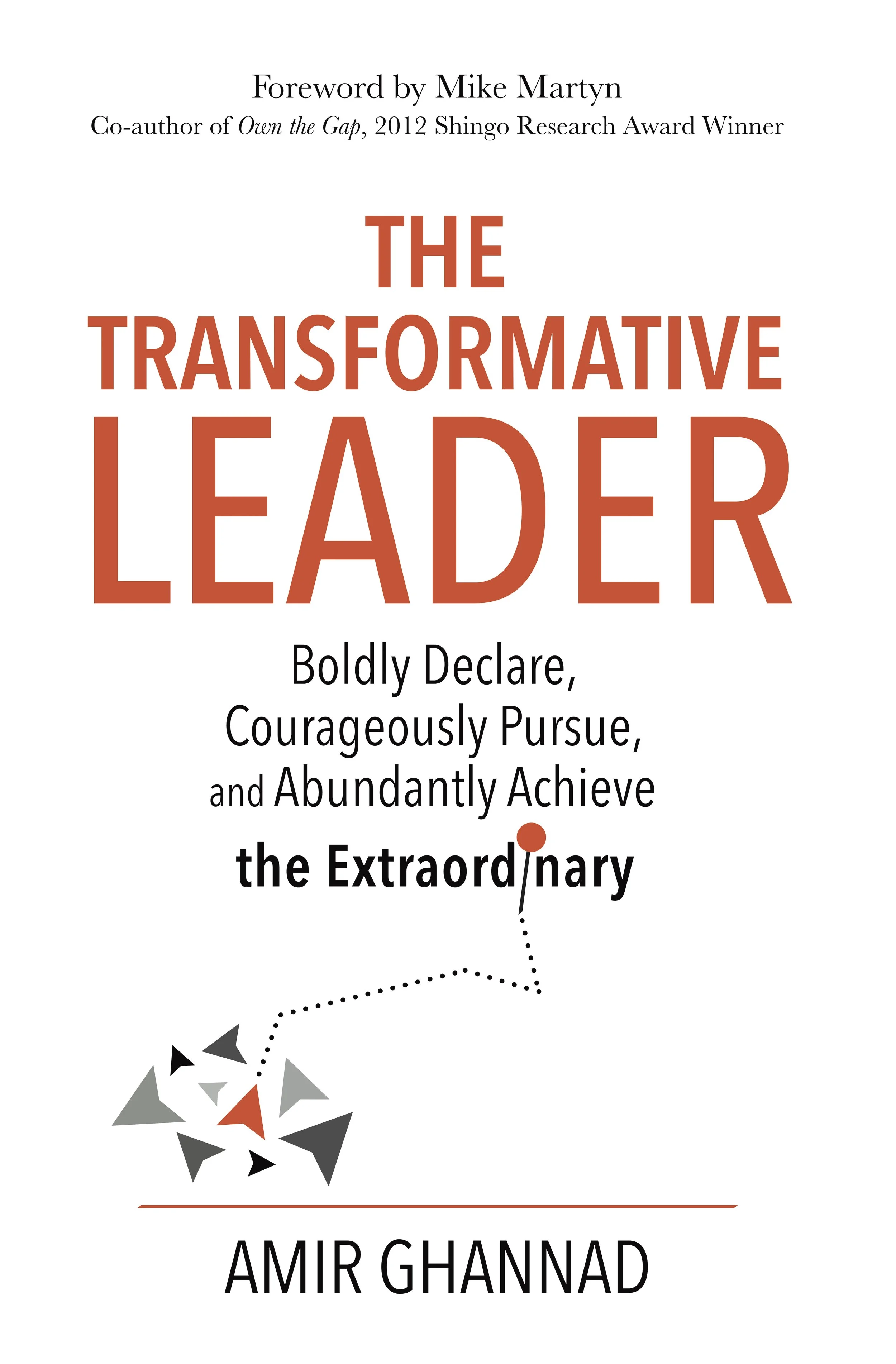
In this video, I want to share some good news with you. If your transformation is stalling, if you're not making as much progress as you want, it may not be because you're doing everything wrong. In many cases, all it takes is a little tweak. In fact, if you're watching this video and if you're interested in my content, I can almost guarantee you that you're doing most of what needs to be done right. It's just a matter of figuring out what is messing things up. I want to share with you a real life story that has been a lesson that has kept on giving for years and years. This story is featured in my book, The Transformative Leader, in a chapter called Pay the Parking Fee. Many years ago, I had a facilitation gig. I was working full time. But at the same time, I had just gotten certified as a facilitator and I was moonlighting. I would take a vacation day and I would work with a client. And in many cases, I would take the client to the mountains for a day or two, and we would come back with a five-year plan. And on this particular day, I was facilitating a session at a client's office near downtown Atlanta. as I pulled into their garage underneath their building, I saw a sign that said parking was $15 for the day. And I was like, no way, I'm not paying $15. So I pulled back out and I'd seen a sign for parking for five bucks, one of these outdoor lots. So went down there about two or three blocks down, parked my car. And by the time I started walking over to the office, it was drizzling a little bit. As I got a little bit closer to the office, it was raining. So I'm going faster, I'm getting wet. So by the time I got to the client's office, I was drenched and I was out of breath. I still had a few minutes to prepare and the session went well, but that was cutting it too close. I remember that afternoon when I was leaving the client's building, I was thinking to myself, why did I do that? 15 bucks for parking was not a lot of money compared to the thousands of dollars that they were paying me for the day. But my mindset was still the one that I had from years before. See, I came to the US when I was 16 years old, I didn't have a whole lot of money. I didn't know anybody. I didn't speak the language. I didn't have any resources at all. In fact, while I was in high school, I ended up getting the job as a dishwasher, only making $2 an hour. And over time I had developed this mindset of being frugal and not spending any more money than I have to. But that had been many years prior. And at that point, while I was making the kind of money that would make it real easy for me to afford the $15, I still had that mindset. So that day I learned a lesson that sometimes you've got to pay the parking fee. Sometimes you have to let go of some of the mindsets and thought processes that you've had in the past so that you can move forward. The way I describe it in the book is like going to a formal ball and you have your tuxedo on and everything is looking great, except you have dirty tennis shoes on. Everything else is okay, but that piece does not fit. The same thing is true with our mindset in life or as a leader in the workplace. It's not so much that we're not doing the right things. Sometimes it's because we're holding on to a way of thinking that is no longer conducive to our progress and our success. So since then, my kids who are working with me now on our team oftentimes say to me, okay, you know what? We just need to pay the parking fee. And we all know what that means. That means that we are trying to be too frugal when we don't really have to be, or that we don't want to put in a certain kind of effort because we don't think it's going to work. But if we pay the parking fee, that means we're taking on a different mindset that is really aimed at making great things happen as opposed to being held back by our previous mindset. So coming back to the transformation that you're aiming for, whether it's changing the culture of your workplace, transforming the level of leadership capability that you have, causing people to want to take more initiative and be involved, or work better together as a cohesive team as opposed to going into their silos. Whatever transformation you're out to cause, if it's stalling, if it's not happening, it's discouraging. Sometimes it causes you to question everything you're doing. Oh, I'm not doing this right. I shouldn't be doing this. Maybe that's not right. Maybe. And many times that's not really the case. Many times all it is that you got to tweak something. There's something that is holding you back. Like I mentioned in one of our previous videos, in one case we were doing as a plant, everything that we could to make sure that everyone felt valued. But there was one thing that we weren't doing right. And that was that we had two separate entrances for the haves and have nots. And we eliminated that issue. And it sends a very strong signal to the entire organization because to them, it was clear. Yes, you're doing this right. You're doing that right. You're involving us in decisions and so on and so forth. But that right there doesn't fit, right? And the moment we fix that, then everything came together and we increased the level of trust. If you are developing leaders, for instance, it could be that you're sending them to the right classes, you're giving them the right resources, but you're not necessarily trusting them to make certain decisions or take their new learnings for a test drive. Oftentimes that's the case. We give people all kinds of information. We put them in training sessions and give them tools and in some cases skills, but we don't necessarily give them the opportunity to use it. This is the main reason that our transformative leadership accelerator program really works very well. Because during this three-month program, not only do we give people tools and skills, but everybody takes on a big, hairy, audacious goal, if you will. Everybody takes on a project that they're working on that really stretches them to be their best and to seek out better ways to do things as opposed to just working harder and trying to do better. And in the course of delivering those results, as we give them more tools and more coaching, then they take it and apply it right away. And in many cases, that is exactly what's missing. Are people getting the opportunity to apply what they're learning? So I would encourage you if you are working on a transformation, if you are committed to making the transformation happen, think about all the various components that you have in place. And I would encourage you not to second guess all the great things that you're doing, but ask the question, what is getting in the way of all of these things working? If you're cooking a delicious soup, you may have all the right ingredients, but if you forget to put salt in there, then it is a bit bland and you don't taste anything. The moment that you put a little bit of salt in, that is what transforms the taste of that soup and everything comes together. So what kind of soup are you making and what is the one ingredient that is missing, the presence of which would make a tremendous difference?
Explore more Posts





Follow Amir on Social Media