Vlog #4: Going Beyond Motivation
When I facilitate a workshop or deliver a keynote, my goal is never to simply motivate people for a few hours. Inspiration is valuable, but by itself it fades quickly. What I'm really after is a sequence of outcomes that begins with a transformative realization, leads to immediate action, produces lasting behavior change, and ultimately delivers measurable business and personal results. That's how I define a truly successful leadership development experience.
I believe participants play just as important a role as the facilitator. The people who get the greatest value from a workshop arrive with a clear purpose, remain coachable, and listen for wisdom rather than simply collecting information. Once they experience a meaningful insight, they need to act on it immediately. Transformative realizations have an expiration date, and unless they are put into practice, they become just another good idea that never changes anything.
Sustaining change requires more than motivation. I encourage participants to embrace setbacks as part of the learning process, build systems of accountability instead of relying solely on willpower, and celebrate the behavior changes they see along the way. Progress becomes sustainable when new habits are reinforced through commitment, reflection, and consistent action.
Leaders and event organizers also have a critical responsibility after the workshop ends. They should keep the conversations alive by reinforcing key concepts, checking in with participants, encouraging continued learning, and connecting workshop insights to real workplace challenges. The true measure of a successful workshop is not how people feel when they leave the room. It is how differently they think, behave, and perform weeks and months later.
Key Points
A successful workshop produces lasting transformation, not just temporary motivation.
The four desired outcomes of any successful workshop or development program are:
New personal realizations
Immediate action
Sustainable behavior change
Improved long-term results
Participants should enter every workshop with a clear personal purpose.
Being coachable means being willing to try new ideas, not necessarily agreeing with everything.
Listen for wisdom that applies personally rather than simply collecting information.
Transformative realizations have an expiration date unless acted upon immediately.
Renewing commitment to a purpose greater than yourself increases motivation and follow-through.
Publicly declaring intentions and creating accountability accelerate lasting change.
Sustainable behavior change requires systems, accountability, and embracing failure as part of learning.
Leaders should reinforce workshop concepts through follow-up conversations, continued learning, and practical application in everyday work.
Quotes
"Transformative realizations have an expiration date."
"A successful workshop isn't measured by motivation. It's measured by lasting behavior change and results."
"Knowing something doesn't change your life. Acting on it does."
"Don't wait for motivation. Take action first, and motivation will often follow."
"The true value of a workshop is determined long after the event is over."
-
Have you ever been to a company event that knocked your socks off, a workshop, a leadership development event, or something like that? Now, have you ever been to one that was a complete waste of time? Believe me, as a participant, I have gone through both experiences. That is why I am so committed that when I hold a workshop or when I give a talk, that people get a lot more than they expected to get. In this video, I'm going to share with you some things that the participants and event organizers can do to get the most out of those types of events. It takes a lot of investment of time and money to pull something like that together, to bring everybody together, hire a speaker or have a facilitator. What you wanna do is you don't wanna just have a motivational experience. You wanna go way beyond that. And I'm gonna share with you the outcomes that I am after when I do one of those sessions and some of the things that you can do as a participant or an organizer to make sure
way beyond the event itself, you maximize outcomes that you get. I recently came back from an event with a client that I really enjoyed working with. So we had a one day workshop and it was a great experience. I knew it was really good when we took our first break about two hours into our one day session. And the leader was talking to me. went up to him to say, okay, so how's this going for you? And he told me that one of the participants told him that if we just stopped right now and did nothing else, that they felt that they got enough value out of the workshop to make it worthwhile. So I was really happy to see the testimonials that I got after the workshop. And most people quite honestly would declare victory. They say, okay, that's a successful workshop.
And yes, it's really great news when you actually hear that the conversation moved people and it gave them something to work with and they were really happy. But that's only the first step in the series of outcomes that I personally look for. When I give a talk, what I am really looking for is four things. One, I want the participants to see something in the workshop for themselves that they couldn't see before that would make it visible to them what is possible, who they are, what they're capable of, something that would energize them. The second thing I'm looking for is that immediately after the workshop, the participants are energized to get in action. Transformative realizations have an expiration date. when you have a realization, you ought to get in action. Even if it's just a couple of baby steps, because if you don't, then you put that realization and that knowledge in the pile of things that you have known, but have not done you any good, right? And if somebody suggests that you take a particular action, according to that knowledge later on, you say, oh yeah, I know. But knowing things doesn't really help you. Once you get in action,
then you begin to see the benefits. The third thing that I'm looking for is that in a couple of weeks that they are able to see the behavior changes that have taken place in themselves. And I want them to be able to point to some behaviors that have shifted from before the workshop to after the workshop. In this situation, I used to act this way, and now I see myself behaving this way. And the final thing I'm after is that in a couple of months, they ought to be able to point to some results that have actually shifted. So realizations that have resulted into actions that have actually culminated in some different behaviors, which produce different results. Now, let's face it, no matter how amazing a facilitator or a trainer or speaker is, and no matter how transformative their content is, the final ingredient that really creates something extraordinary is the participant and the attitude that they bring in. So this is why I always ask ahead of time what people are actually experiencing.
committed to getting out of the session. I have my objectives based on the extensive pre-work that I do with clients. I know what I would like to accomplish, but what's most important is what are you, the participant, who want to get out of the session that would make this an extraordinary experience? That process in itself does wonders for people because rather than sitting in the session and just saying like, happened to me, if you go into the session clear that, look, I am here to learn this, or I am here to experience that, then you will look for the insights to actually make sure you walk out of there with that outcome. Whether you volunteered to be there or you were voluntold, you're going to spend a few hours of your life in that session. So have a purpose.
The second thing is be coachable. Coachable doesn't mean that you agree with everything. Coachable means that you're willing to try it on. And the third part of this is to listen with the intent to gain wisdom, as opposed to just picking up information, but not connecting it to yourself. Listen with the intent to attain wisdom about yourself and your situation. To develop motivation and energy to get in action, there are again three suggestions that I have for you. Number one, get in action on your new insight immediately. As I mentioned earlier, I mentioned this again because oftentimes we wait for motivation to do something, but many times it works the other way around. You got to get in action, take a few baby steps, and then
generate motivation. So don't wait for motivation. Begin to act on what you picked up in the workshop. Number two, renew your commitment to a cause greater than you. Look, when you are committed to something bigger than yourself, you are more likely to get in action. It's a natural thing. When the only thing at stake is something that has to do with you, you're less likely to find the motivation to act. For instance, if you're going to go work out early in the morning, isn't it true that if you're doing that by yourself, you're more likely to skip a day here and there versus if you had a partner and you didn't want to let them down. So renew your commitment to something bigger than yourself.
And finally, to develop the motivation to get in action, declare your intentions to other people. Don't keep it a secret. If you got something out of the conversation and you're committing to changing your behavior, let other people know. Let them know what your intentions are and ask them to keep you in check. Let me know, please, if I behave differently because my intention is to act on the things that I learned in this workshop. That keeps you in action and it gives you the motivation to keep going. Now, to turn those actions into sustainable behavior shifts over time, there are also three suggestions that I have for you. Number one, embrace failure. Just know that if you have behaved a certain way for a long time and now all of a sudden you have a different point of view and different perspective and you intend to behave a different way, sometimes you might fall into your automatic patterns and that's okay as long as you recognize it and you change course. Because if you use your first failure as an excuse
to get off track and say something like, yeah, that stuff sounded good in the workshop, but it doesn't work, then essentially you have given up on those actions turning into sustainable behavior shifts. Number two, don't rely on discipline alone to keep you on track. Put a system in place, put a process in place, renew your commitment to a worthy cause. If you lose sight of your commitment and try to still maintain your discipline to do something that you don't see any point in, that's not going to work and it's not going to be sustainable. Finally, take the time to acknowledge your behavior shifts. Talk to some of those people who are your accountability partners, the ones who you ask to keep you on track. Check with them to see if they're noticing something. If you are noticing something in yourself in terms of those behavior changes, take the time to celebrate and acknowledge those. I also have some suggestions for leaders and organizers of leadership development events.
Because it's important when an event goes well that you strike while the iron is hot, if you will. Because it's one thing to be motivated coming out of a session, but if that motivation is not connected to reality, then it dissipates in the face of everyday challenges. And this is why we've got to integrate what we got out of the workshop into our daily lives. So here are some of the things that you can do as event organizers or leaders, or even if you are one of the participants, you could take these actions to perpetuate the message and the value that you got out of the workshop. Number one, listen for the distinctions that are presented in the workshop. There are a large number of
distinctions that I present. I talk about being on the court and playing the game as opposed to being in the stands and talking about the game. This usually sticks with people. We talk about being 100% committed as opposed to having a conditional and partial commitment. I have a saying that says, I am the one and it's not about me. And all of those things, when we come out of a workshop, I hear people talking about it. And what's important is that you, continue to listen for those particular distinctions that have stuck for people and bring those into conversations and make sure that you continue to perpetuate that kind of language. The next thing I suggest is that you have as many one-on-one conversations as you possibly can with the participants. These don't have to be 45 minute one-on-ones, but just a five minute check-in. Hey, what did you get out of the workshop? This is what I got. This is what resonated with me. What do you think about ways in which you can apply some of the things that you got? The other thing you can do is dig into the material
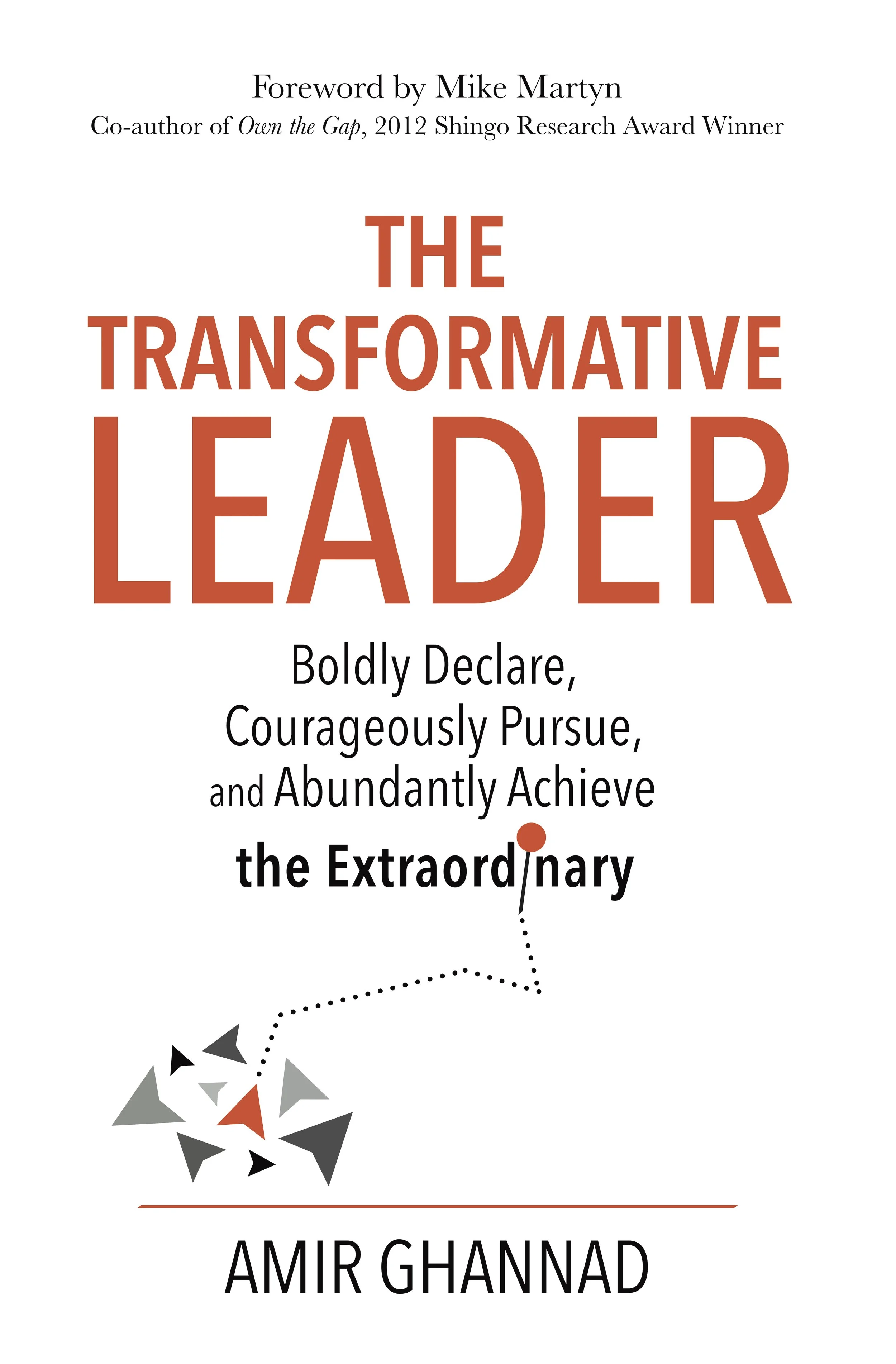
that is in line with the work that was done in the workshop. In my case, most of our clients end up conducting a book study with the transformative leader. And so there is a great deal of overlap between what's in the book and what I present in my workshop. So that keeps the conversation alive. You also may looking to blog posts or articles that are written by your speaker. In my case, the ganotgroup.com slash blog has like 500 articles that could also be used to generate conversations in small groups that will keep that conversation alive. Another way that you can make sure that you connect people's reality to what was presented in the workshop is to talk about what challenges they are dealing with. In addition to starting with some of the concepts that were presented, you actually start talking to them about what they've got going on and work back from there and connect some of the challenges that they're dealing with to some of the concepts that were presented. There are a number of things that you can do within your organization to make sure
that you continue to get the most out of sessions. And as we have our events with our clients, what I do is I have a debrief with them where I share some of these standard items, but also based on my observations and based on the conversations that I've had, I formulate a number of actions that they can take to make sure that they maximize their benefits from the workshop. I hope that you've gotten something out of this video that you can act on immediately. And I would encourage you, if that's the case, to begin taking action on it as soon as possible. And if you want to get in touch with me to get clarity on any of the points that have been made or learn more about the services that we offer, please feel free to schedule a discovery call and we'll have a chat.
Explore more Posts





Follow Amir on Social Media