
Vlog #16 - An Introduction to “The Transformative Leader”
-
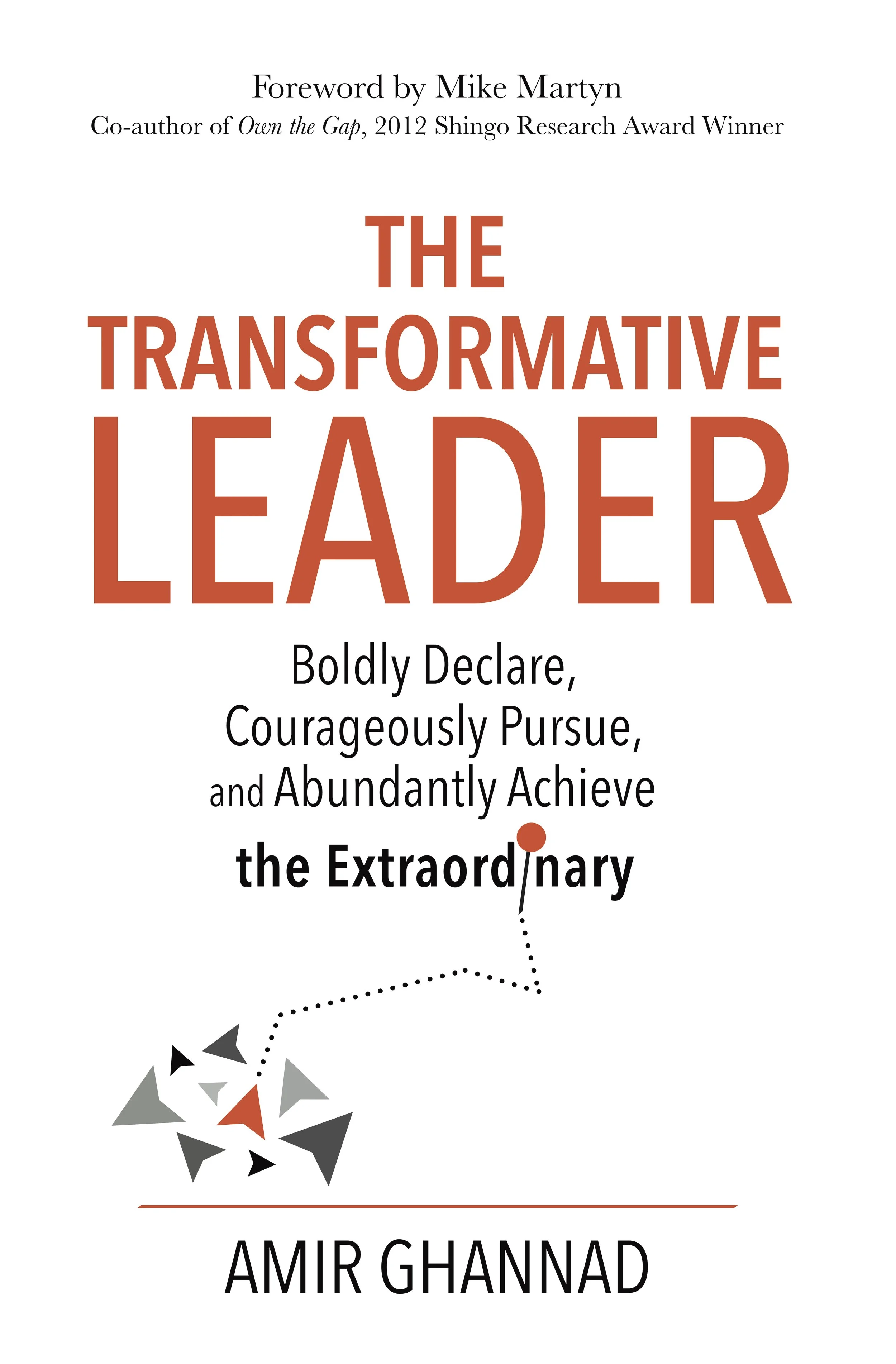
Amir Ghannad is a leadership development specialist with over three decades of hands on experience in leadership and organizational development. He's the author of The Transformative Leader: Boldly Declare, Courageously Pursue, and Abundantly Achieve the Extraordinary. He explains what he means by the term transformative leadership. Transformative leadership comes down to two things. One is boldly declaring a future that is exciting, that is discontinuous from what is. In other words, it's not just a different version of what we've got going on. It's not about fixing things or repairing things. It's boldly declaring a future we're excited about. The second thing is then to create conditions in which everyone chooses to be fully committed and actively engaged in moving the organization toward that vision. So that to me sums up…transformative leadership. Amir tells us how transformative leadership is relevant to success in business and to delivering bottom line results by offering some examples. I have numerous examples of where transformative leadership has made a tremendous difference. I spent thirty one years in various leadership roles in the corporate world, in various parts of the world, and I've been involved in several turnarounds, one of which always really kind of stands out to me because, we not only transformed a manufacturing plant from being the worst performing plant to the best, but we improved our morale and the lives of people there. And it was all done through transforming the culture. so the there is a, an absolute…correlation between transformative leadership and bottom line results, and I've seen it many times. Amir explains how an organization should go about creating a high performance organization. Everybody wants to be a high performance organization. I've never met somebody who says, well, we kinda wanna be a mediocre, performing organization. However, not everybody wants to do the work, to become a high performance organization. And that work involves creating a, what I call, a high commitment culture. And so what's involved in creating a high performance organization is that it has to be about delivering extraordinary results that people can take pride in. The second thing is that it cannot be a project, something we give to HR and say, go do these kinds of things. It has to permeate everything that we do. And finally, it has to be, something that involves creating leadership capability at all levels of the organization because everybody is going to be touched…and everybody is going to impact, the, creation of a high performance organization. Culture is a critical component of all organizations. People call Amir Ghannad a culture transformation catalyst. Next, he gives us his definition of culture. I think of culture, in very simple terms, and it's not some fuzzy, idea. It's about the culmination of behaviors that take place in an organization. So simply if I am a fly on the wall and I'm watching people and see what they're doing, that basically shapes the culture. Are they talking to people in their own department, in their own silo, or are they going across? Are they solving problems to root cause? Or are they just band aiding things? So that to me is culture. And every result that an organization gets is the direct outcome of that culture. So if you want different results, you have to shift your culture. And so there are two, categories of work, if you will, that I do with my clients. The first thing has to do with the systems, the processes, the policies, that entice people to behave this way or that way. So many times, you have to make sure that you…don't just…make a change in your structure or whatever, but not change your reward system. So we look at holistically, look at all of the different things that cause people to behave one way or another. The second thing is developing leadership capability at all levels of the organization. At the top, so that they become servant leaders and everywhere else on the front lines particularly so that they're not just waiting for their bosses to become perfect. And they can see clearly that right where they are, they can impact the culture. Amir explains how a high commitment culture is different than a traditional one. A high commitment culture, has a lot of different characteristics that are just very different than what we do by default or what I call a traditional culture. I define, thirty four dimensions of these in my book, The Transformative Leader. And, there are things like, for example, in a traditional culture, everything, all the decisions are made top down. and, in a high commitment culture, we basically distribute that responsibility and authority throughout the organization. in a high commitment culture, we, give recognition, abundantly. whereas in the traditional culture, we're kinda careful, with that. We don't wanna do that. We share information openly in a high commitment culture. we make sure that, people are really clear about the goals of the organization and the part that they play as opposed to just saying, hey, this is your job, this is your box, stay there. So there are a number of, characteristics that separate a high commitment culture. And I, again, define those, in my book. Is there a difference with the culture transformation process in a large organization versus a smaller one? The principles behind culture transformation are exactly the same, whether you are dealing with a hundred people or a hundred thousand people. What's different is, of course, with a large organization, you'd wanna make sure that you have some visible changes in your systems and processes that people can see immediately. But what doesn't change is that personal touch. In fact, what I always coach people on is don't get overwhelmed by how you're going to reach all of these people. Because if you think about the compound effect of one person affecting two people and then each of those two people affecting two other people, in a very short period of time, you can touch the rest of the organization. Just begin to practice the principles, that create a high commitment culture with your small group and expect them to do the same. And pretty soon, it spreads like wildfire. Amir discusses how you go about developing a transformative leader. I believe that there is a transformative leader inside each of us. And the reason we don't show up that way and the reason we don't feel that way sometimes is that there's something in the way. I have these seven hidden saboteurs of success and fulfillment that I show people. They're very simple, yet, they have a profound effect as to how effective you are at practicing transformative leadership. And so what I do is essentially say, the first thing you need to do is declare a bold future because I don't want you in some class so you can learn something about leadership so that you can apply it someday. I want you to have a very practical, real life, sort of goal that you're going for. And then in the service of that goal, I help you see what's in your way, so you can get it out of the way. And then I arm you with the appropriate skills and tools so you can become even more effective…at doing what you do. Amir talks about how his approach is different from traditional leadership development. Traditional leadership development is all about giving you more information, giving you more tools. It's kind of like, just putting something on you, what I call informative training. What I do is mostly transformative training, which does involve giving you some new things, but mostly is about getting something out of your way. in other words, the metaphor that I always use is that imagine that you're driving down, the highway and you're just not going fast enough. Traditional, leadership development shows you how to push the gas a little bit more or downshift or whatever you gotta do. What I do is I show you where you've got your left foot resting on the brake pedal. And when you take it off, then you really begin to pick up some speed. Amir Ghannad is known for his phrase, quote, I am the one, and it's not about me, end quote. He explains that paradox. I often, tell people that, if they adopt this idea, behind I am the one and it's not about me, they truly capture the essence of leadership. Because I am the one says, in the context of the transformation that I'm committed to, the buck stops here. I'm the one. If it's to be, it's up to me. I take full responsibility and accountability. It's not about me, says, when I get into my head about the implications on me, if I wanna come up with an idea and I feel like, well, what's that going to make me look like? What if they say no? I remind myself that it's not about me. I'm doing all of this in the service of a greater cause. So when you embrace both of these ideas, then you become a lot more effective at transformative leadership. If you've ever worked in organizations where people were working in silos, how counterproductive it can be. In organizations like this, rather than working together to create synergy, team members work against each other with the aim of optimizing their own interest at the cost of significantly sub optimizing the interest of the organization as a whole. And since even those working toward their own ends are part of that whole, by pursuing their own interests, they are also paradoxically working against them at the same time. The leading cause of silos being formed is that team members feel that nobody has their back, and they feel compelled to seek refuge in the company of those they find to be most like them. In this sense, silos or any other kind of insular group is really just the result of our natural human tendency to seek out community, especially when we feel that we have been abandoned by the larger group. Before you know it, people in these silos lose all sense of what is right or wrong with respect to the organization, and they become entrenched in what they consider to be in the best interest of the group of people they identify with. Amir doesn't believe that you have to hold a traditional leadership position in order to cause culture transformation. He tells us how you should show people who are not in charge that they are leaders and that they can lead from where they are. I do believe that it's important for top leaders to support, the movements that, people want to start. However, I've seen countless examples, where we've had grassroots movements, where somebody without a title, just, committed themselves to something and they made it happen. And so my advice to people on the front line or somebody who doesn't consider themselves to be the top manager or top leader, is to just really set your sights on a worthwhile transformation and begin to get excited about it. Then talk to a few more people about it. Get them excited about it. Show them what's in it for them. then issue some kind of a call to action. a lot of times people wanna get involved, but they don't know how. so let them know how they can get involved. Create a following in the service of a great cause. And you'll see that just believing in a positive future immediately shifts your mindset in terms of your own experience of your workplace. And that gives you even more energy to take more actions. Now can you go write a million dollar check tomorrow to do that project and all that? No. But you know what? You work inside your circle of influence, and it begins to grow. Amir referred earlier to the hidden saboteurs of success. He tells us more about them and the impact they have on people and organizations. I believe that we are all transformative leaders, and sometimes we're stopped by some of our, disempowering beliefs that we have, developed over the years. We make these assumptions about ourselves and about our boss, about our world, about our employer that essentially, stop us from really showing up as the transformative leaders that we are. so these hidden saboteurs really have to do with questioning some of those assumptions. They have to do with really paying attention to our language. we use disempowering language, what I call the language of people in the stands as opposed to people on the court, who are actually trying to make things happen. So that language perpetuates a kind of a victim mentality. oftentimes we don't focus, for example, on a transformation that is really worthwhile. we only focus on change, which is fixing things and repairing things. And it gives us a new and different version of what we don't want. So I talk about these seven hidden saboteurs. And when people see what's in their way, they're able to get it out of the way and become much more empowered and effective at what they do. Air explains whether it is more important to start leadership development at the top of the organization or on the front lines. Leadership development is important. And if you just get started, it doesn't matter where you get started. However, what is, I think, ideal is that you do it in parallel. And this,
has worked for me for years, where I've started working with the leaders at the top, and there are certain ways in which I coach those folks around, how to really shift the culture, using their, power and authority and the resources that are available to them. But at the same time and in parallel, coaching everybody else to say, look, here are some of the ways that you can go about leading. Because many times what happens, particularly to leaders in the middle of the organization, is that they have risen in ranks to a certain point because they did a really great job. and they're functional experts, but they don't know anything about leadership. They've learned a few things through the school of hard knocks, but nobody's really ever coached them on what to do, what not to do, how to go about it. So I think, ideally, I would have a parallel approach at the top of the organization and closer to the frontline. Amir explains what prevents most organizations from adopting the transformative leadership approach. I can speak from my own experience, on why organizations resist, an approach of transformative leadership or creating a high commitment culture. because leaders feel that they are responsible to get things done, and so they wanna just tell people what to do. And oftentimes, they're going for the short term results and not necessarily empowering people. Unfortunately, people within the organization kind of get used to that. And even though, deep inside they would like to be empowered, they kind of find it easier to be told what to do and not have to take responsibility, for the decisions that they make. so in my own experience, when I was the plant manager of this plant that we turned around, from being the worst to the best, I found that as I took this approach of empowering people, they were kind of annoyed with me because they kept coming to me, wanting me to tell them what to do, and I refused to do that. And it took us a while, to really understand that that's not what leadership is all about. and when we all embraced it, then we began to, take some huge steps in the direction of establishing a high commitment culture. What if your boss is not supportive of leadership development? What do you do then? Unfortunately, many organizations, suffer from this issue of their boss not being, an empowering person, not being supportive. and in those cases, although it's not ideal, what I always advise folks to do is…start with yourself. look, your view of the world, your view of the boss, and your view of what you're going to tolerate and not tolerate really has a lot to do with your current circumstances. so in some situations you may just need to accept the situation as an immovable object and work around it. In some cases, if you're truly feeling that you're having to compromise your values and things like that, it might be time to move on and do something else. But if you're gonna stay, you know what? Commit to it one hundred percent. Start with yourself. and I've experienced that myself. I started in the middle of the organization doing a lot of this work. And in many cases, my bosses were wondering why I'm working on all this touchy feely stuff and all of this type of thing, soft skills and all of that. And then at some point when we delivered the results, we made believers out of them. So don't give up on yourself. Just go make it happen. Amir Ghannad offers some recommendations for leaders who want to go deeper with applying the ideas that we've been talking about. I would say leaders, would be well served in starting with themselves. Develop a sense of self awareness. So instead of asking, why is my circumstance this way? Why is my boss that way? Why is this happening to me? Start asking, why do I tolerate that? Where do I need to get better? What is it that's inside of my circle of influence, to go make something happen? So if you have a situation that you're dissatisfied with, begin to ask those questions and they all come back to you. What are the choices you're making? And that's where you start. The next thing is, instead of just jumping from this problem to another problem and playing whack a mole with your problems, if you will, declare a bold future. Get excited about something. What is it that you want? Stop focusing on what you don't want. Focus on what you want. And then the third thing is begin to work with the rest of the organization, even if it's just a small group of people, to build some support for this transformative future. Begin to instill some hope in others so that they want to work with you to create this future. And those three steps alone will make a huge difference, and then you'll build on those. We hear a lot about tone at the top. Amir tells us how that fits into what we've been talking about. The tone at the top of the organization is absolutely important. Now is it possible to have some grassroots movements, if the boss doesn't really get it? Yes, it is. However, it's so much easier and it takes so much less effort and energy if the bosses get it. Right? So I always say even the greatest leaders can't make anything happen by themselves. They need the organization. but a terrible leader can really mess things up single handedly. Okay? So there's a lot of power that we hold at the top of the organization. I experienced myself the way I came across and, sort of my mood and whether I was hopeful or I was disappointed or whatever, would just send these shock waves within my organization. I'd walk out to the manufacturing plant floor one day and ask people how things were going and they were all exuberant and happy. And two days later I'd ask the same question and they all seemed down. And it took me a few months to figure out that they were simply mirroring me. If I'm walking up to you and say, how's everything going? You know what? If you're an employee, you don't wanna be too excited because a, all heck is breaking loose and you don't know about it, or b, you know about it and you don't care. So you might have been excited just before I walked up to you, but now it's like, oh, man, the boss is feeling bad. so the tone at the top is extremely important. You can learn a lot from great leaders, but you can also learn from bad bosses. Many of us have had to deal with our own fair share of bosses who did everything they could to make things difficult, both for you and for the organization. Most were more concerned with their image than the health of the organization, lacked emotional intelligence and tactfulness, and didn't believe transformation was possible or even worth pursuing. There were those who constantly sowed seeds of doubt and cynicism, those who didn't lift a finger to help with transformation efforts, and even those who actively seemed to create roadblocks for any initiatives that were actually gaining traction. Here are some lessons learned from bad bosses. One, when it's necessary to deviate from arbitrary standards in order to meet a real business need, go ahead and do it, even though you may have a scar to show for it later. Ideally, when such deviations are warranted, extend the courtesy to inform those who have set those standards as soon as possible. Two, embarrassing people in front of their peers or anyone else for that matter serves no productive purpose and will do irreparable damage to your reputation that you will never really recover from. Just don't do it. And if you do, apologize and make it right. Three, never shy away from delivering the tough feedback people need to hear, but do it while keeping your composure. And certainly, do not rehearse premeditated drama for effect. It causes you to lose credibility, make you look like a buffoon, and gets nothing useful done. Four, integrity matters all the time. That goes triple for leaders. When you demonstrate a lack of integrity in one area, you lose credibility and respect as a leader and as a person in all areas of your life. Five, we all make mistakes. When it happens, own up to it. If you can make it right, do so. But if it can't be done, apologize and try to make it up to the person who was affected. Amir Amir recaps for us the important aspects of transformative leadership. See, transformative leadership is not about just understanding or learning some ideas, and then that's it. You're at the finish line. You're there. It's something you gotta work on every day. That's why it's so important to create the right sort of environment where people are armed with the language that perpetuates a certain kind of mindset, certain kind of behavior. So when I work with organizations, what I do is I do this baseline training with them so we can arm them, with the right language of, for example, things that stick. are you are we on the court? Are we in the stands? Are we a hundred percent committed, or are we fifty fifty committed? Those things stick. And then the work is to really make sure that language and that sort of behavior permeates everything that we do. Most organizations that I've worked with are really, they have no shortage of people who really care, and they are experts at what they do. The problem is sometimes their passion is expressed in the form of what I call drama. You see, there's a chapter in my book called “Keep the Passion, Ditch the Drama.” Because sometimes we think that drama has to go with passion. If I care about something, if it doesn't go my way, or if I hit a snag or something because I care, then I experience drama. If I didn't care, I don't if I didn't have any passion for it, I wouldn't have any drama. But because I care, I experience this drama. So there's this, sort of misconception that drama has to come with passion. It's a package. It comes together. Well, that's not the case. What I teach is, look, when you are in the passion zone, you have a certain mindset and you're behaving a certain way. When you're in the drama zone, you are in a completely different zone. So you have left the passion zone. So it is really important for us to be able to help each other within the organization and coach each other so that we can stay out of the drama zone and get back into the passion zone where we actually get to influence that very thing that we care about. Amir referred to how passion often comes out in the form of drama. He provides some insights into how you can avoid the drama. There are three questions that I pose in my book, The Transformative Leader, and they can be answered individually. I offer a few suggestions, but the right answer is the one you come up with. The first one is, what is my brand of reoccurring drama? if I look at my life, where does drama show up in my life? And if you look, you'll see some of those reoccurring patterns. The second question is, how can I prevent that drama? Instead of just waiting until it happens? What is it that contributes to it and how can I prevent it? And the third question is, what if in spite of my best efforts, drama happens anyway? How do I immediately bring it down and get rid of it? So I make a few suggestions in my book. But again, those are just thought-provoking, sort of points. But each person has to answer those questions for themselves and, then act on the answer. According to the dictionary, accountability is the willingness to accept responsibility for one's actions. Why is it such a big issue today? One of the problems that many organizations, struggle with is accountability. So I ask people in the audience, how would you rate, the organization on the scale of zero to ten on accountability? Ten being like super accountable. And usually I get a number less than five. Then I ask them to rate themselves. You as a person, how accountable are you? Well, I usually get a number over six or seven. So how is it possible that this entire organization rates so low, but everybody in this audience, has such a high number on accountability? Well, the reason is that we basically judge ourselves by our intentions, and we judge others by their behavior. So we see something out there that says this person said one thing and did another, and we label them as not accountable. And, when we do it ourselves, then we say, okay, well that was justified. There was a good reason for it. And so one of the reasons that this continues to fester in organizations is because…they don't have the conversations that they need to have, to work through those things. so here again, a lot of organizations say, you know what? We have a communication problem. And what I always remind them of is that they don't really have a communication problem. They have a commitment problem. And a good example of that, I think, is in just about any of those organizations that suffer from communication issues everybody gets paid when they're supposed to, and generally, it's done accurately. Well, hundreds of pieces of information have to change hands for that to happen. So when we care about something, when we're committed, we communicate, impeccably by the way. But when we are not committed to resolve an issue, to work through an accountability problem because we're hesitant and all of this kind of stuff, then we find all kinds of excuses. Oh, I don't have time. I've got a lot going on and so forth. So one of the things that I offer in my book is, five steps in having the conversations that you've been avoiding. and I have found that to be extremely helpful with people who have tried it. Again, around the world, I have tried this and it really works. And it really has to do with not just going to the person in an offensive sort of, position saying, hey, you messed this up. But starting with confessing your own sins, even if it's like, “hey, I've been meaning to come talk to you about this, but I've been kind of avoiding it because I just didn't know how this was gonna go.” And then putting the problem out there, then listening and capturing some of the agreements, and then making sure that at that point, we talk about what there is that we disagree on and working through a solution. So as we implement this sort of approach in organizations, I have found that they go from a sort of, a culture of silos. And when I say silos, not just departments, but everybody kind of being on their own island, if you will, to one of collaboration, working through accountability issues, creating an accountable, culture, and taking communication to that next level, and that benefits everybody. Amir explains why this discussion on transformative leadership is important to managers. It's extremely important. I have, I've had experiences with so many projects that looked so great on paper, and then they failed, simply because what we focus on is the technical part. We focus on functional expertise. We focus on, tools and systems. We don't focus on the mindset. It's kind of like if you're building a really great house and you go out and invest in the best materials possible. And then you're like, okay, so everything's gonna be great, except you go out and hire a contractor who has never built a house and doesn't really care if they do a good job or not. How does that work? Well, it doesn't, right? So basically what organizations do oftentimes is they say, okay, what software do we need to buy? What equipment do we need to install? How much does it cost and how much is it going to return to us on paper? Oh, that sounds good. Let's go make it happen. They don't pay attention that aside from the toolset, you also need the right skill set. While some of them go beyond the toolset and give people some skills, they do some of the training. But then they miss the mindset. Are people bought in? Do they care? Do they see what's in it for them? Do they see a connection? So this is where transformative leadership comes in. people are obsessed sometimes with change management, but change is often not the problem and management is often not the solution. What the problem is transition leadership. So you make the change, great, but now you've got to lead the transition. And that's where this, these concepts that I'm talking about really come in handy. They make a difference. Amir Ghannad leaves us with one final thought on transformative leadership. I would say to managers, that because you are involved in so many, high level decisions, I know that you cannot get into all the details of how projects are done or how initiatives are managed. But it is extremely important that you go beyond just asking questions about the obvious things that look good on paper and ask questions about the transition. What about the organizational dynamics? If we're going to institute this change, how does that impact people? Are they bought in? Are they trained? How are we going to manage this transformation in a holistic fashion? So go beyond the hard stuff because when it comes to transformation, the hard stuff is easy. The soft stuff is hard.
Summary
Note: This week’s video is a little different than our usual ones; it’s an interview I did explaining some of the core concepts of my book, “The Transformative Leader,” as well as transformative leadership in general. This is a great primer (or refresher) for anyone interested in the foundations of my core philosophy and approach.
I describe transformative leadership very basically as a combination of two elements: boldly declaring a future that is exciting and discontinuous from what exists today, and then creating the conditions in which people choose to become fully committed and actively engaged in making that future a reality. I've seen the connection between transformative leadership and business results firsthand. In one of the most notable turnarounds I led, we took a manufacturing plant from the worst-performing plant in the company to the best while simultaneously improving morale and people's lives. We did it by transforming the culture. To me, culture isn't some fuzzy concept. It is simply the culmination of the behaviors that take place in an organization. If you want different results, you have to change the behaviors that produce those results.
Creating a high-performance organization requires more than a project handed off to HR. It has to permeate everything we do, and it requires developing leadership capability at every level. I distinguish this from traditional leadership development, which often focuses on giving people more information and more tools. My approach is more transformative and focused on mindset. I want people to declare a bold, real-world future and then identify what's getting in their way. I use the metaphor of driving with your foot on the brake: traditional training teaches you how to press the gas, while transformative development helps you identify and release the brake. That includes addressing the seven “Hidden Saboteurs,” changing disempowering language and assumptions, and helping people move from being spectators to being active participants in creating the future.
I also believe leadership and culture transformation are not limited to people with titles. There is a Transformative Leader inside each of us. Grassroots movements can create tremendous change when people get excited about a worthwhile future, bring others into it, show them what's in it for them, and give them a way to participate. At the same time, the tone at the top matters enormously because people constantly take their cues from leaders. I've experienced this myself: the mood of the people on a plant floor could change simply because they were mirroring my own mood. Leadership also requires accountability, difficult conversations, integrity, and the ability to keep passion without allowing it to turn into drama. One of the biggest obstacles I see is that organizations often focus on tools, systems, and functional expertise while overlooking the mindset and commitment required to make those things work.
Ultimately, I want leaders to start with themselves. Instead of asking, “Why is my boss like this?” or “Why is my organization this way?”, I encourage people to ask, “What do I tolerate? Where do I need to get better? What is inside my circle of influence?” Then I encourage them to stop focusing exclusively on what they don't want and declare a bold future they actually want to create. From there, they can build support, instill hope, and begin influencing the people around them. When organizations undertake change, managers need to look beyond the technical solution and ask about the transition: Are people bought in? Are they prepared? Do they understand what's in it for them? How will the organizational dynamics be affected? The hard stuff is easy. The soft stuff is hard.
Key Points
Transformative leadership starts with declaring a bold future, not simply repairing what already exists.
A Transformative Leader creates conditions where people choose to become fully committed and actively engaged.
Transformative leadership directly influences bottom-line business results.
Culture is not an abstract concept. Culture is merely the culmination of the behaviors people demonstrate every day.
If you want different results, you have to change the culture and behaviors that produce those results.
A high-performance organization (HPO) requires a high commitment culture (HCC), not simply better processes or technology.
Culture transformation cannot be delegated to HR as a project. It has to permeate everything the organization does.
Leadership capability needs to be developed at every level of the organization.
Traditional leadership development often adds information and tools, while transformative development focuses on removing what is getting in people's way.
There is a Transformative Leader inside each of us, but hidden assumptions and disempowering beliefs can prevent that “inner leader” from showing up.
Leadership isn't restricted to people with formal authority. Grassroots movements can and have transformed societies in the absence of “official” leadership.
Tone at the top matters because people constantly take behavioral and emotional cues from leaders.
Leaders can learn valuable lessons from bad bosses, including the importance of integrity, composure, accountability, and treating people with respect.
Passion does not have to come with drama. Leaders can and should care deeply without becoming consumed by emotional reactions.
Organizations often mistake a commitment problem for a communication problem.
Transformation requires more than a toolset and skillset. It also requires the right mindset.
The technical aspects of transformation are often easier than dealing with organizational dynamics, human behavior, and commitment.
Quotes
“Transformative leadership comes down to two things: boldly declaring a future that is exciting, and creating conditions in which everyone chooses to be fully committed.”
“If you want different results, you have to shift your culture.”
“There is a Transformative Leader inside each of us.”
“Traditional leadership development shows you how to push the gas. I show you where you've got your foot resting on the brake pedal.”
“You don't have to have a title to lead.”
“Keep the passion. Ditch the drama.”
“Stop focusing on what you don't want. Focus on what you do want.”
“Change is often not the problem, and management is often not the solution. What the problem is is transition leadership.”
“When it comes to transformation, the hard stuff is easy. The soft stuff is hard.”
Explore more Posts





Follow Amir on Social Media